
VA said it fixed burn-pit denials. Its watchdog found the reviews still missed errors.
VA said it corrected old burn-pit denials. OIG found the reviews still missed errors. Follow the timeline, evidence and unanswered outcome question.

Clear guides, original reporting and a closer look at VA claims.
Original reporting, public records and the questions that deserve answers.
VA said it corrected old burn-pit denials. OIG found the reviews still missed errors. Follow the timeline, evidence and unanswered outcome question.

Compare HUD’s FY2027 rent benchmarks across all 15 Arizona counties with current VA disability payments. Includes county data and calculation methods.

Arizona’s 2027 veteran property-tax changes follow documented concerns about county guidance. What the public record shows and what applicants should check.

Arizona agency records describe historical waits for free claims help. Learn what the figures establish and how to check for a suitable appointment.

Arizona’s VetLink settlement includes a $1.2 million restitution fund. Understand the published deadline, payment window and outstanding outcome measures.
The newest articles from every section.

A denial is easier to respond to when you identify the disputed issue, preserve the deadline and choose a review route that can consider the evidence you need.

Three unfavorable opinions did not end this appeal. The Board found problems in their reasoning and weighed them against lay history and a detailed private evaluation.

VA does not add ratings. It applies each one to what is left, then rounds once at the end. Here is the math, the bilateral factor, and why a displayed 90% hides the real number.

Back pay depends on the effective date, the first payable month, the right year's rates and what VA already paid. A month-by-month worksheet makes the award easy to check.

Estimated 2027 VA disability rates for every rating and household after the 3.6% increase, with the method checked against last year's official table.

These regulations explain common questions about evidence, service connection, ratings and review options. They are a reading guide, not a list that controls every claim.

Court citations become useful when you understand the question each case answers. This guide covers evidence, examinations, ratings and several important limits.

On October 29, 2026, VA began requiring a reviewer's signature on final CUE decisions that cut a rating or sever service connection. Here is what to check.
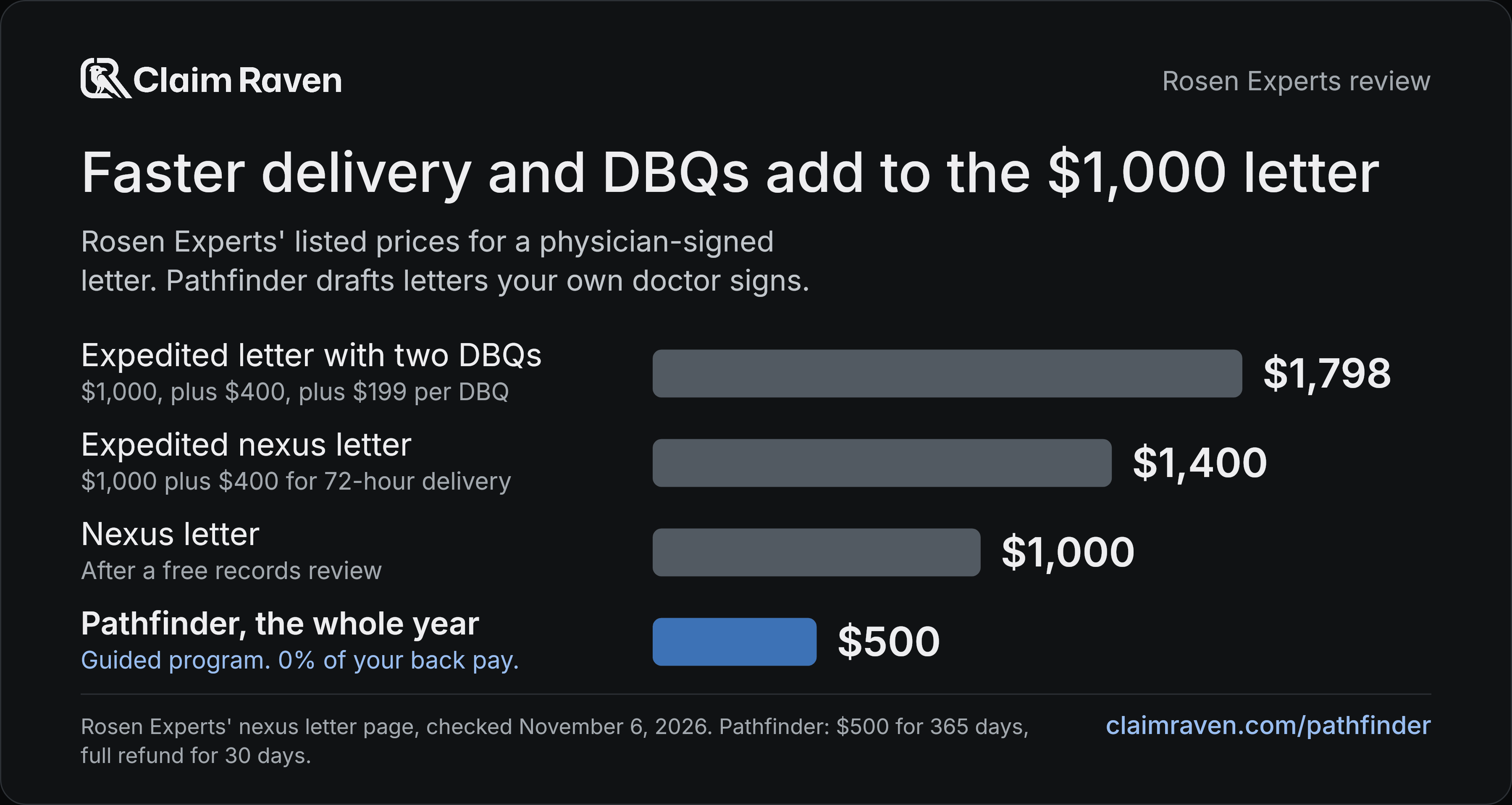
Rosen Experts charges $1,000 for a physician-written nexus letter after a free records review. Here is what the price covers, what its sample letter shows and what to confirm before you pay.

The Board granted hypertension under the PACT Act but remanded other theories that could matter to an earlier period. It also identified unanswered heart and kidney questions.
Understand the process, gather useful evidence and prepare your claim.
A denial is easier to respond to when you identify the disputed issue, preserve the deadline and choose a review route that can consider the evidence you need.
VA does not add ratings. It applies each one to what is left, then rounds once at the end. Here is the math, the bilateral factor, and why a displayed 90% hides the real number.
Back pay depends on the effective date, the first payable month, the right year's rates and what VA already paid. A month-by-month worksheet makes the award easy to check.
Estimated 2027 VA disability rates for every rating and household after the 3.6% increase, with the method checked against last year's official table.
On October 29, 2026, VA began requiring a reviewer's signature on final CUE decisions that cut a rating or sever service connection. Here is what to check.

Special monthly compensation covers specific losses and care needs. Learn how the main levels differ, which amounts replace basic pay and where to check eligibility.
The evidence and reasoning behind individual Board decisions.
Three unfavorable opinions did not end this appeal. The Board found problems in their reasoning and weighed them against lay history and a detailed private evaluation.
The Board granted hypertension under the PACT Act but remanded other theories that could matter to an earlier period. It also identified unanswered heart and kidney questions.

One Board decision upheld a retrospective reduction based on its fraud finding while granting a later period at 100%. The two rulings answered different questions.

A long cardiovascular appeal turned on whether the veteran had rheumatic heart disease, what later testing showed, and whether service affected a congenital condition.

One VA examiner diagnosed TBI and connected it to documented head injuries. A later opinion missed those facts. Here is why the Board gave them different weight.

VA reduced this veteran's GERD rating from 30% to 10%. The Board restored it and separately awarded 60% from May 2022, based on the evidence for that period.
A closer look at the numbers and patterns in VA claims and appeals.
These regulations explain common questions about evidence, service connection, ratings and review options. They are a reading guide, not a list that controls every claim.
Court citations become useful when you understand the question each case answers. This guide covers evidence, examinations, ratings and several important limits.

Our extracted Board records show different outcomes under different service-era labels. The comparison does not isolate the effect of service era or presumptive rules.

A second or third remand means the required work may still be unfinished. Our reviewed records show why remand counts cannot predict your eventual result.

The Board's own FOIA data shows appeals are not decided in the order they were filed. I matched 218,614 of those decisions to their text to test the usual explanations and to measure the fast lane the files leave out.

The intelligence and logistics categories differ by 10.2 percentage points in our sample. Small groups, missing labels and repeated decisions limit what that means.
Reviews of claims services, medical-evidence providers and software.
Rosen Experts charges $1,000 for a physician-written nexus letter after a free records review. Here is what the price covers, what its sample letter shows and what to confirm before you pay.

VMHA lists a $1,795 mental health opinion and a staged option totaling $1,990. Here is what the price covers, what credentials show, and what to clarify.
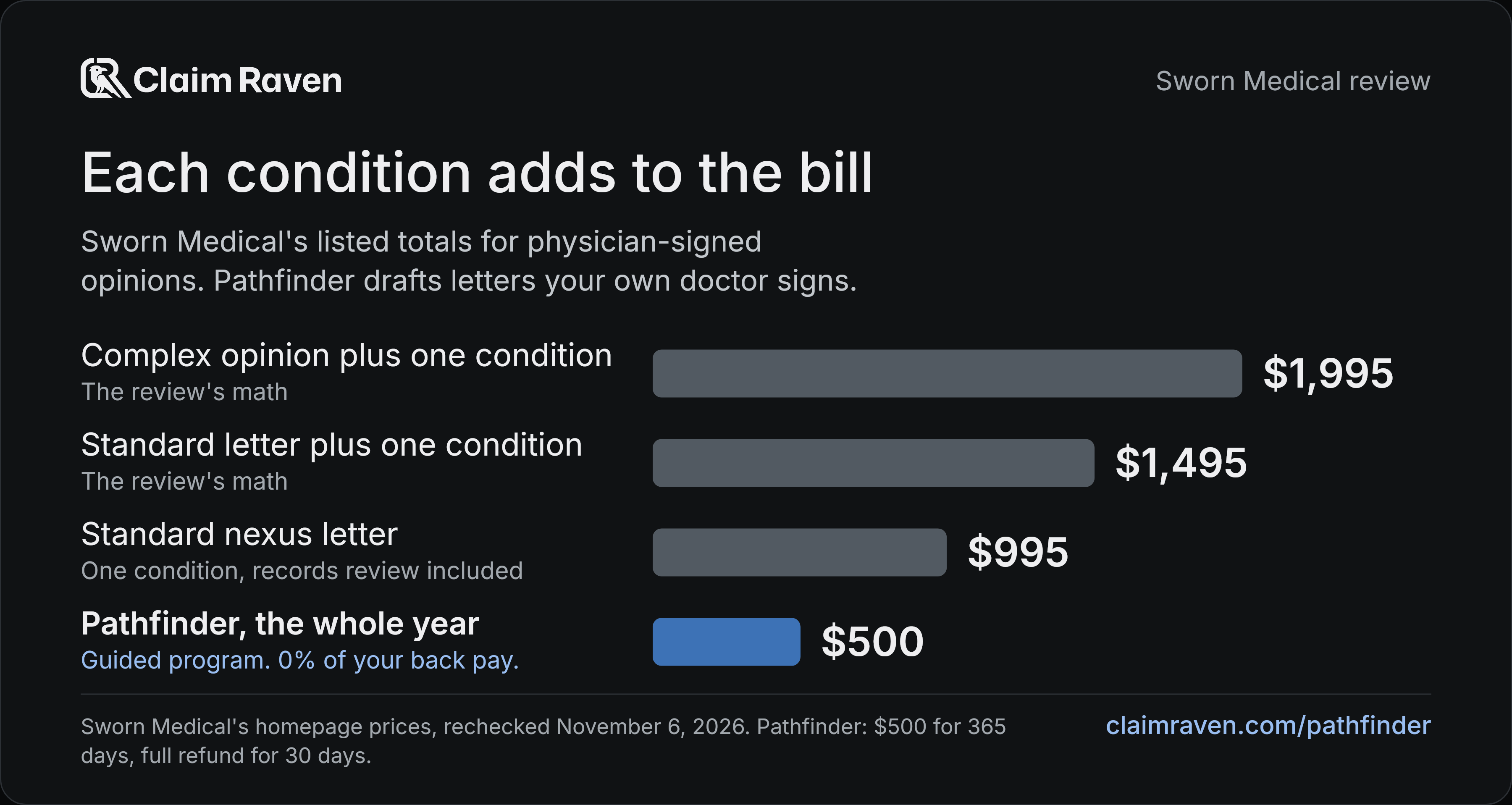
Sworn Medical names its physician and publishes flat nexus-letter prices. We examine the costs, credentials, refunds, service scope and customer-evidence limits.
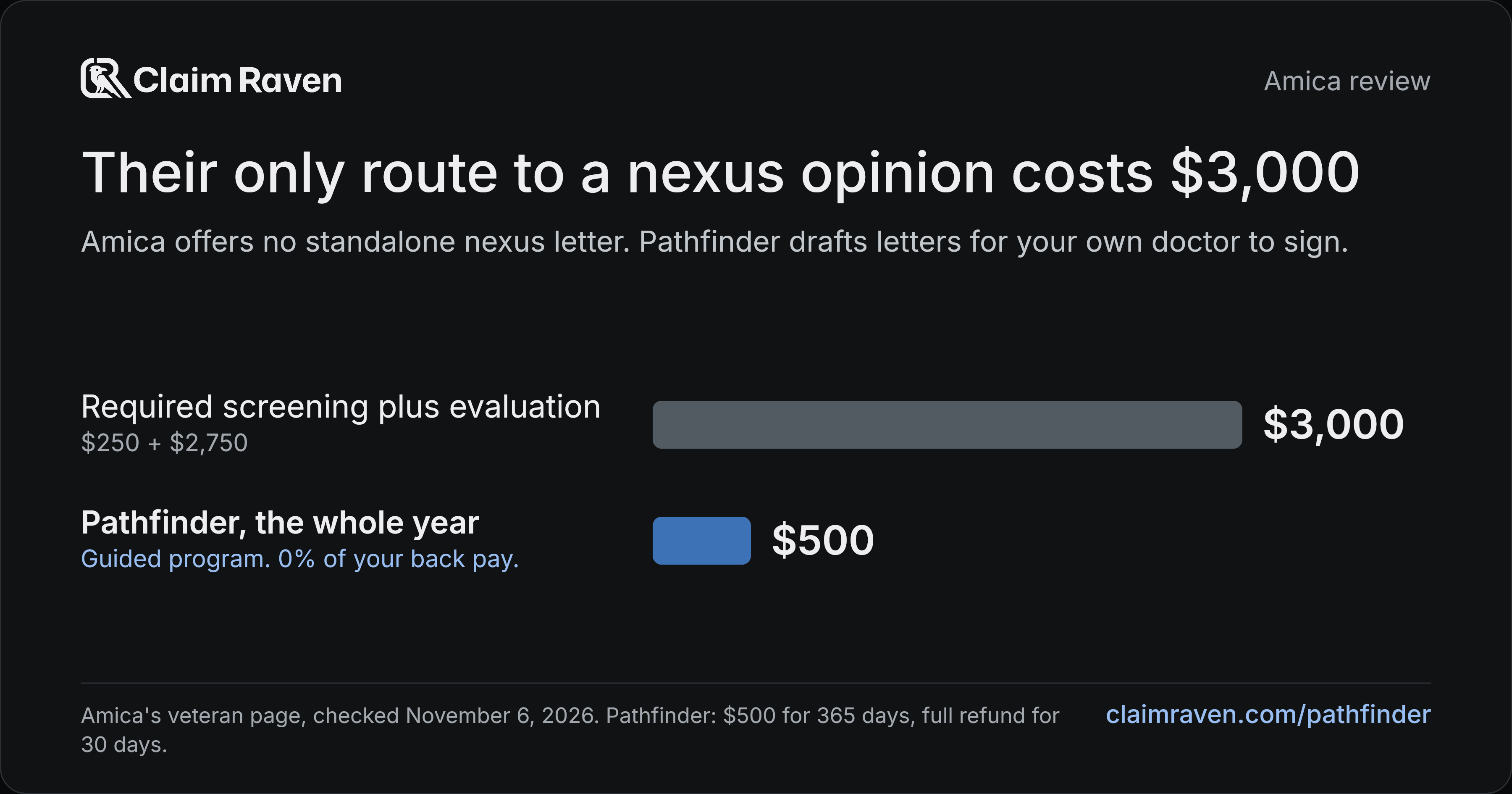
Amica review covering the $250 screening and $2,750 evaluation, mental-health DBQs, nexus limits, credentials, refund terms, and sparse public feedback.
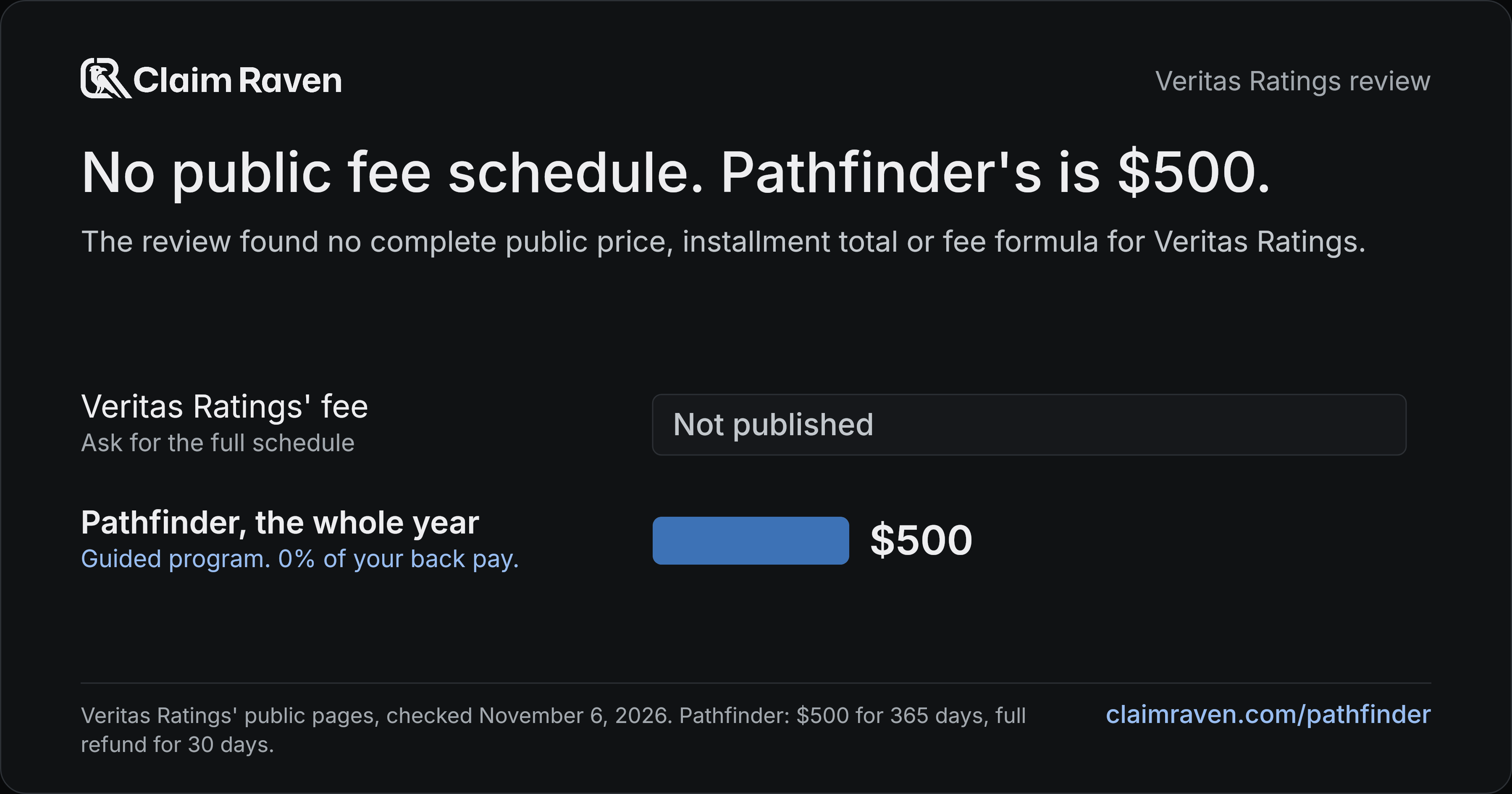
Veritas Ratings review covering consulting scope, undisclosed prices, customer terms, indefinite data retention, and selected positive and mixed feedback.
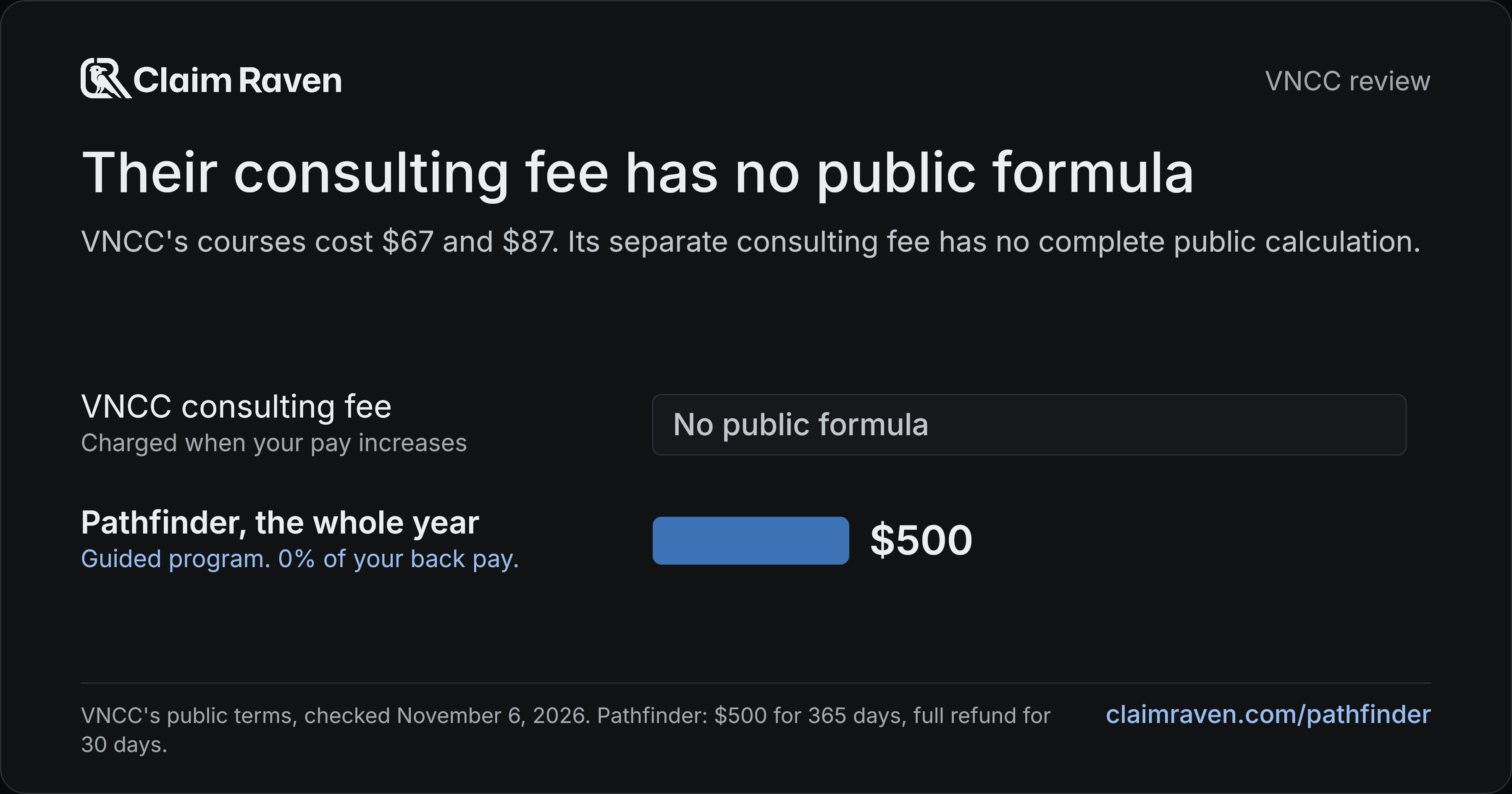
VNCC review covering $67 and $87 courses, separately contracted consulting, refund and review restrictions, privacy, and positive public feedback.
Practical help for work and life after military service.

The pages ranking for this search give three complete letters, all office jobs, and contradict each other on tone. Here is the same letter in four tones, plus a full infantry example no other ranking guide publishes.

The DD-214 holds no accomplishments, and the critics are right about that. Here is the block-by-block map of what it does hold, what it can pre-fill, and the three fields that should never reach an employer.

The pages ranking for this search disagree on the single most important format rule. Here is the current two-page requirement, the fields a federal resume demands, and where your preference documents actually go.

Three complete veteran resume examples grounded in a real occupational dataset: a junior enlisted supply specialist with no degree, a mid-career combat medic, and a Space Force cyber officer. Each shows the jargon bullets before and the civilian rewrite after.

The pages that rank for this search tell you to translate your jargon, then leave you guessing at the words. I pulled real MOS translations and the 2026 pay tables so you can see the exact titles, skills, and salary numbers.
Changes to VA rules and what they mean for your claim.
On October 29, 2026, VA began requiring a reviewer's signature on final CUE decisions that cut a rating or sever service connection. Here is what to check.
Our extracted Board records show different outcomes under different service-era labels. The comparison does not isolate the effect of service era or presumptive rules.

A presumptive claim needs proof that you served in a listed place during listed dates. How each exposure program draws its map, which records prove location, and what to do when no record shows it.

The PACT Act presumes asthma diagnosed after service is service connected for covered veterans. If you are not covered, the claim needs a medical link. Check which route VA decided.

VA said a supplemental claim used up Robert Hoffman’s Intent to File. The court disagreed. Here is the filing sequence, what changed, and the records to check.

The Federal Circuit says a claim the VA never explicitly decided is still pending. Here is how to read your decisions since 2019, spot an unaddressed issue, and act on it.
One email per week with new guides, reports and VA updates. Unsubscribe anytime.