
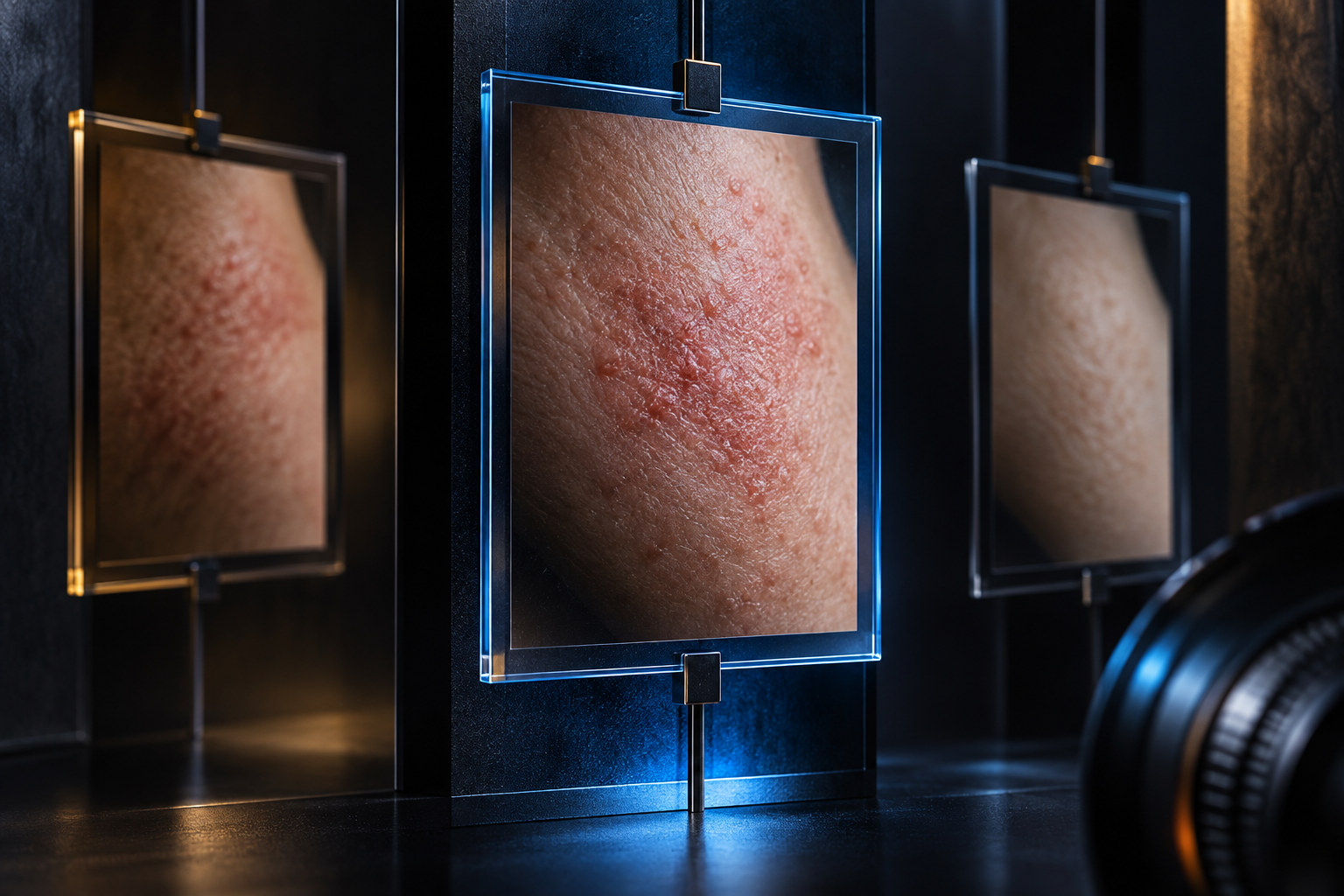
Skin flare-up photos help a VA claim when they are dated, taken the same way each time, show which body areas were involved, and sit next to a timeline of treatment. They show an examiner and a rater flares that have faded by exam day. In one 2025 appeal, photos of several body sites, along with treatment records and a family member's account, outweighed an exam that recorded a rash on one arm.
What VA measures for skin conditions
For dermatitis, eczema, psoriasis and several other conditions, VA uses the General Rating Formula for the Skin in 38 C.F.R. § 4.118. Each level can be met by the share of the body affected or by the treatment required over the past 12 months:
| Rating | Affected area | Or systemic treatment over the past 12 months |
|---|---|---|
| 60% | More than 40% of the entire body or of exposed areas | Constant or near-constant systemic therapy, such as corticosteroids, phototherapy, biologics or other immunosuppressive drugs |
| 30% | 20 to 40% of the entire body or of exposed areas | Systemic therapy for a total of six weeks or more, but not constantly |
| 10% | At least 5% but less than 20% | Intermittent systemic therapy for less than six weeks in total |
The VA skin diseases DBQ asks the examiner to estimate the affected area and to list treatment by type, route and duration. Claim Raven's skin DBQ guide walks through the form, and the eczema condition guide covers the most common skin claim. Some skin diagnoses use other codes, so check the one in your decision. Your photos document what the skin looked like; the clinician estimates the percentage.
Take photos that can be compared
Use similar lighting, distance and body position each time. Take one overview that shows where on the body the flare is, and one closer image for detail. Keep the original files with their dates, and do not change colors or retouch the area. Leave out faces and other identifying features when they are not needed, and photograph only your own condition.
If the camera date is wrong, record the correct date separately. A photo taken after treatment still helps; label it as after treatment. Do not stage a flare or delay care to get a more dramatic image.
Fictional example: "September 4, right forearm, red itchy patch after work. Overview and close-up saved as original files. Used the cream prescribed in June as directed. Woke twice scratching. September 9 clinic note records improvement." This entry does not imply a diagnosis, systemic therapy or a body-area percentage.
Pair every photo with a timeline entry
Across a month, note when the area appeared, spread, improved or returned; which sites were involved; which prescribed treatment you used and for how long; and whether sleep, clothing, work or movement changed. Keep pharmacy and visit records. The rating formula separates topical creams from systemic (oral or injected) medicines, so do not relabel a cream as a systemic treatment.
Use a photo index alongside the timeline:
| Original filename | Date taken, or honest estimate | Body site shown | Related flare entry or clinic visit | Date submitted to VA, if any |
|---|---|---|---|---|
Show your clinician the timeline and photos, especially if a flare cleared before the appointment, and ask them to record their own observations. Do not draw or guess affected-area percentages on a phone image. If you submit images, follow VA's evidence upload instructions and leave unrelated private images out.
A real appeal: photos of several body sites against a narrow exam
In Board decision A25094527, October 30, 2025, a March 2021 VA exam recorded dermatitis on the right arm only, affecting less than 5% of the body. Photos VA received in November 2021 showed a rash on the arm, thigh, both legs and torso. At her June 2025 hearing, the veteran testified that the photos were taken in 2017, that the examiner refused to accept them and said they would take their own, and that they did not. Her grandmother described recurring flares, and later treatment records identified additional sites.
The Board of Veterans' Appeals (the Board) gave the narrow exam finding little weight because it conflicted with the treatment records, photos and lay statements, and granted an initial 60% rating for dermatitis. The photos were part of a larger record, not a standalone test. The Board also kept track of when the photos were reportedly taken versus when VA received them, which is why your index has both dates.
Two practical points follow. Bring your photo index to the exam and offer it. If an examiner declines to look at it, write down what happened that day, with the date, so you can describe it later.
Skin appeals in Claim Raven's Board data
In Claim Raven's analysis of 2024 to 2025 Board decisions, eczema was a decided issue in 2,002 condition records: 39.9% favorable, 27.8% denied and 32.3% remanded. Where the Board quoted lay evidence such as the veteran's or a family member's statements, 54.7% of 1,058 eczema records were favorable, compared with 24.0% of 915 where it did not. Claim Raven has not measured how often photos specifically appear in these records. These are appeals of already-disputed claims, and the label mixes service-connection and rating issues, so the figures describe patterns, not your odds or a cause. The lay-evidence study explains the measurement. For a skin claim where VA never ordered an exam, see this Board remand. If a skin increase was already denied, this increase-denial guide shows how to compare the decision with the criteria.
Claim Raven, which sells claim-preparation tools, offers a free statement builder on this page that can summarize your dated observations. Keep the original image files and record references.
Sources and scope
Checked September 23, 2026: 38 C.F.R. § 4.118 (eCFR, current through August 27, 2026); the VA skin diseases DBQ; VA evidence guidance and upload instructions; and Board decision A25094527. A photograph is an observation, not a diagnosis or a rating.
 Back Pain Flare-Ups for a VA Claim: Document Changes in Daily Function
 Asthma Evidence for a VA Claim: Medication History and Breathing Tests
 Dermatitis From Dust Exposure: Why the Board Ordered the Missing Exam (A24016423)