

VA recognizes specified cancers and respiratory illnesses as presumptively connected to qualifying Gulf War era and post-9/11 service. If your diagnosis and service meet the applicable presumption, you do not need a separate medical opinion proving that a particular burn pit caused the condition.
You still need to establish the diagnosis and qualifying service, and VA needs evidence of severity to assign a rating. A toxic exposure screening, a deployment, or the words “PACT Act” on an application do not by themselves establish every requirement.
Which conditions are on VA's list?
The following categories are listed on VA's PACT Act benefits page, checked September 8, 2026. Use the exact diagnosis in your medical record; do not guess a disease category from a symptom.
Cancer categories
- Brain cancer, including the separately listed glioblastoma category.
- Gastrointestinal cancer of any type.
- Head cancer of any type.
- Kidney cancer.
- Lymphoma of any type.
- Melanoma.
- Neck cancer of any type.
- Pancreatic cancer.
- Reproductive cancer of any type.
- Respiratory cancer of any type.
These are categories. If your report uses a different medical term, ask your clinician to clarify the diagnosis rather than treating a similar-sounding name as confirmation. Follow VA's linked cancer guidance for the specific disease.
Other listed illnesses
- Asthma diagnosed after service.
- Chronic bronchitis.
- Chronic obstructive pulmonary disease, or COPD.
- Chronic rhinitis.
- Chronic sinusitis.
- Constrictive bronchiolitis or obliterative bronchiolitis.
- Emphysema.
- Granulomatous disease.
- Interstitial lung disease.
- Pleuritis.
- Pulmonary fibrosis.
- Sarcoidosis.
A symptom such as shortness of breath does not tell you which diagnosis applies. Get the medical question addressed through your care team. The claims process is separate from getting needed medical care.
What service locations and dates qualify?
VA's PACT Act page lists these exposure presumptions. Keep the service records that establish where you served and when.
| Period | Locations listed by VA |
|---|---|
| On or after August 2, 1990 | Bahrain, Iraq, Kuwait, Oman, Qatar, Saudi Arabia, Somalia, and the United Arab Emirates, including the airspace above these locations |
| On or after September 11, 2001 | Afghanistan, Djibouti, Egypt, Jordan, Lebanon, Syria, Uzbekistan, and Yemen, including the airspace above these locations |
Do not mix this list with the location rules for Agent Orange, Gulf War undiagnosed illness, or another exposure program. The lists overlap in places but are not identical. The diagnosis, dates, and legal presumption must match each other.
If your location or diagnosis is not listed, that does not automatically mean you cannot establish service connection. You may need additional evidence connecting the condition to service. Read VA's evidence requirements and discuss the specific history with an accredited representative.
What records should I gather?
Organize the file around three questions: what condition is diagnosed, what service qualifies, and how the condition affects you now.
| Question | Records to identify | What to check |
|---|---|---|
| What is the exact diagnosis? | Specialist notes, pathology if relevant, imaging reports, or other diagnostic records | Name, subtype, date, and whether the record confirms a diagnosis or only discusses a possibility |
| Where and when did you serve? | Separation documents, deployment orders, personnel records, or other service documentation | The location and dates actually shown, including any gaps that need clarification |
| What is the current severity? | Treatment notes, required tests, medication records, oxygen prescriptions if relevant, and functional history | What the records establish and what still needs medical assessment |
| Has VA decided this condition before? | Prior decision and its reasons | Whether this is a new claim, an increase, or a request to review a previously decided issue |
A personal statement can help describe your actual duty location and what you experienced. It should not invent an exposure measurement or supply a medical diagnosis you have not received.
A fictional example: pulmonary fibrosis after qualifying service
Suppose a veteran has a specialist's pulmonary-fibrosis diagnosis and records documenting service in a qualifying location and period. The preparation task is to confirm those documents, identify the current respiratory evidence, and check whether VA has decided the condition before.
The presumption can address the connection to service. It does not select the rating percentage. Pulmonary-function testing and other findings may still matter under the applicable rating rules. See the pulmonary fibrosis guide for the distinction between service connection and severity.
This example does not establish anyone's eligibility. It shows why a diagnosis record and a deployment record answer different questions.
What if VA denied the condition before the PACT Act?
VA says you can request review through a Supplemental Claim if a previously denied condition is now presumptive. Its current Supplemental Claim guidance specifically addresses requests based on a change in law. Submit or identify the medical evidence documenting the condition and severity and establish the qualifying service.
Do not assume VA will automatically reopen every old denial or award payments back to the first application. Effective dates depend on the applicable rules and facts. Keep the old decision, the new request, and the submission confirmation. Get accredited help if the earlier date or a review deadline is disputed.
Is a toxic exposure screening the same as a claim?
No. A screening is a healthcare process to discuss possible exposures and connect you with information and care. A compensation claim asks VA to decide benefit entitlement. Enrolling in health care or completing a screening does not, by itself, file the disability claim.
Likewise, eligibility for health care and eligibility for a particular disability award are separate questions. Follow VA's instructions for the benefit you are seeking.
Your next step
Write down the exact diagnosis, service location, service dates, and whether VA previously decided the issue. Use Claim Raven's presumptive-conditions tool to organize the match you need to check, then verify it against the current VA list. The tool's result is a research starting point, not VA's eligibility decision.
Sources and limits
Reviewed September 8, 2026: VA's PACT Act benefits guidance, evidence requirements, and Supplemental Claims. The example is fictional. This page does not estimate approval odds, diagnose a condition, or promise a payment date.
 VA said it fixed burn-pit denials. Its watchdog found the reviews still missed errors.
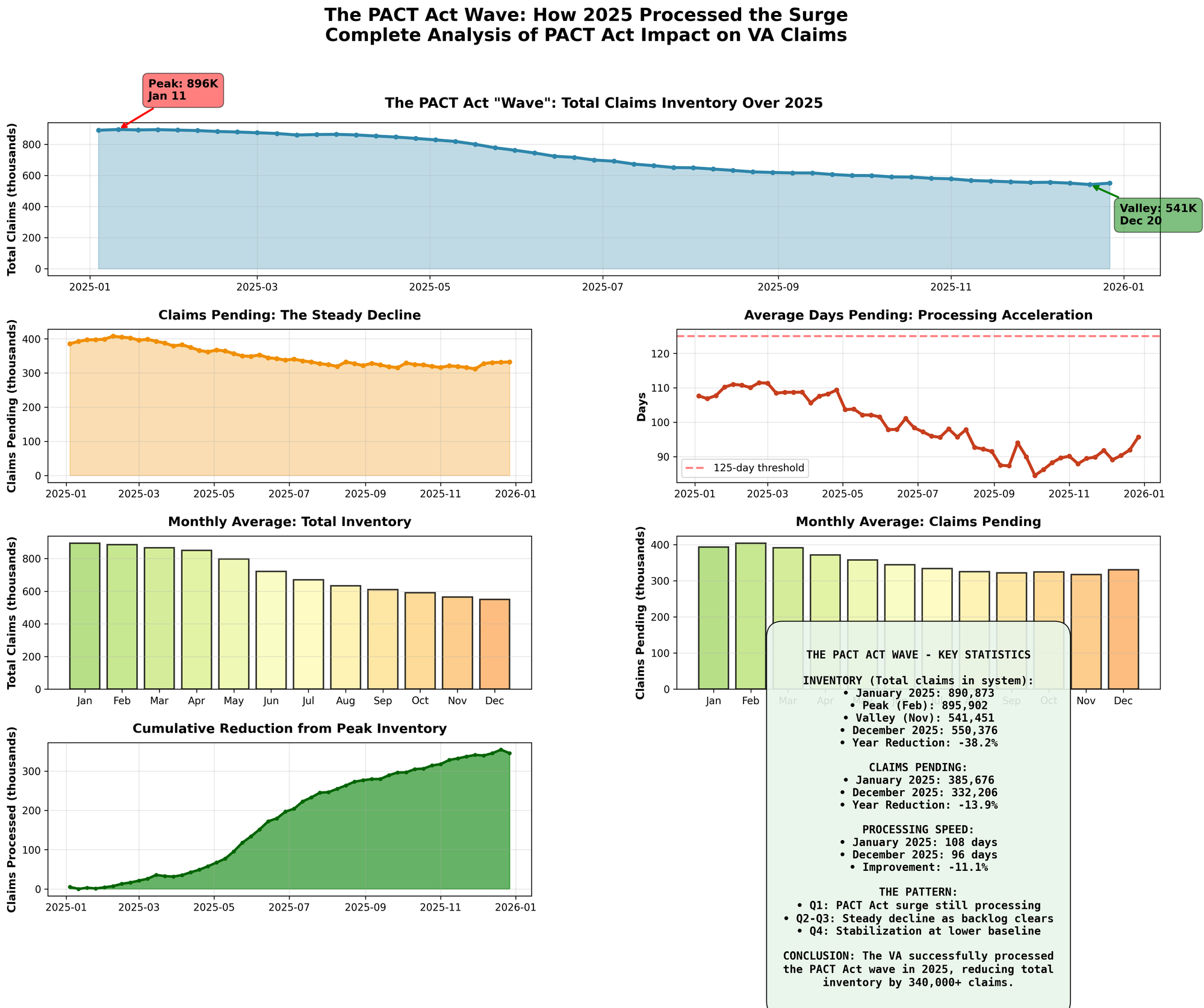 The PACT Act Wave: How the VA Handled the Biggest Claims Surge in History
 When 'Presumptive' Doesn't Apply: Inside BVA A24086734 and the Anemia Denial