
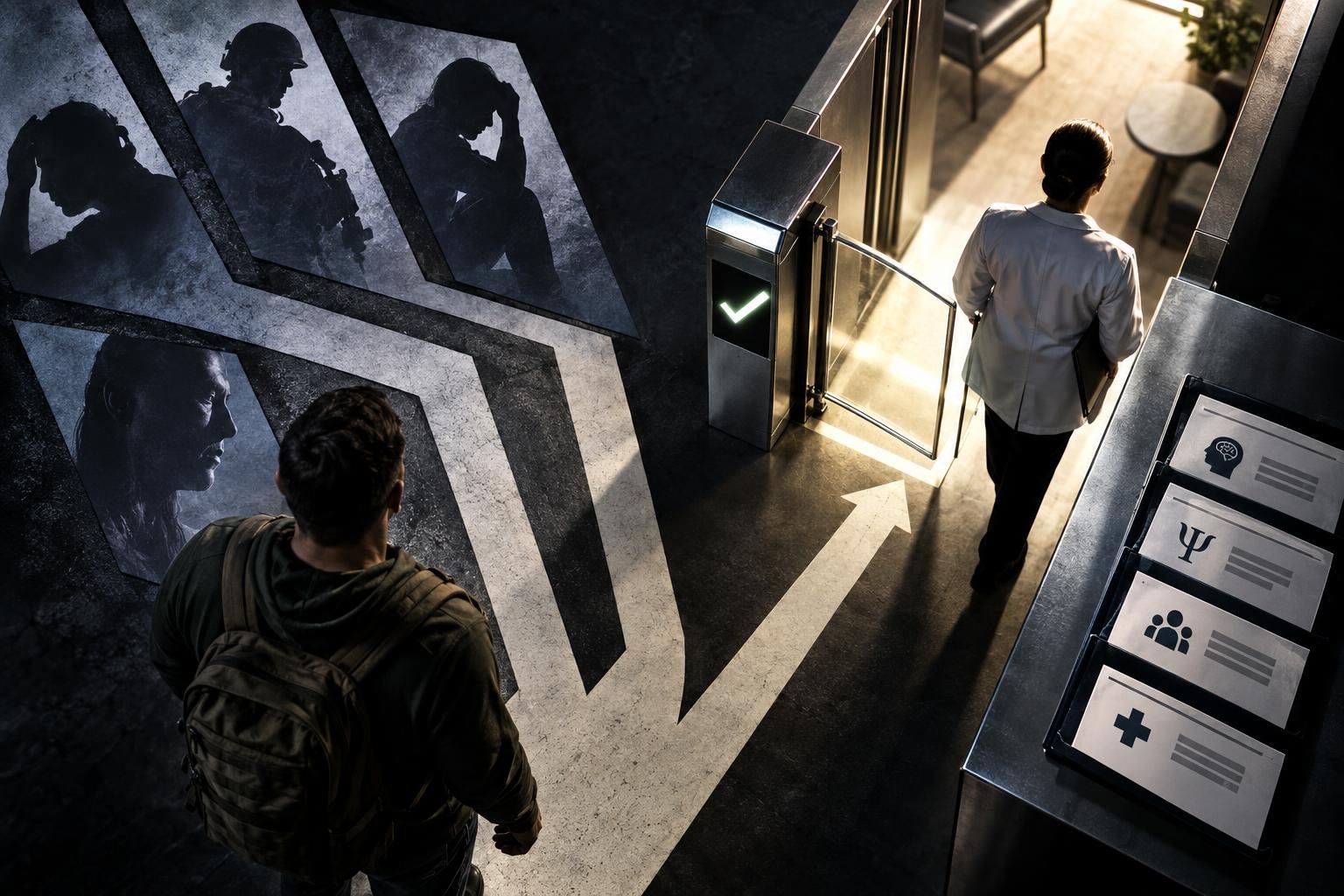
The VA has revised M21-1, Part IV, Subpart i, Chapter 3, Section A — the section that tells claims processors how to judge whether a Compensation and Pension (C&P) examination report is sufficient to decide a claim. The update sharpens guidance on the qualifications a mental health professional must hold to perform a psychological C&P exam. If you have a pending or appealed claim for PTSD, military sexual trauma (MST) residuals, depression, anxiety, or any other mental health condition, this change directly affects how the VA evaluates the exam used to rate you. Examiner credentials are one of the most common — and most winnable — grounds for challenging an inadequate exam. With the revised language now in the adjudicator's field manual, you have a cleaner basis to push back when a report does not measure up. Below is a plain-English breakdown of what the rule covers, what actually changed, and how to use it.
What M21-1 IV.i.3.A Means
The M21-1 is the VA's internal adjudication manual. It is not statute and it is not regulation, but it is the playbook every claims processor at every Regional Office uses to decide your case. Part IV, Subpart i, Chapter 3, Section A covers the general criteria a C&P examination report must meet to be considered "adequate for rating purposes."
In plain English, an exam report is sufficient when it does three things: it addresses the medical questions the rater needs answered, it is based on a review of your relevant history, and it is performed and signed by a clinician qualified to render the opinion. The qualification piece is where mental health exams get scrutinized. For decades, VA policy has required that psychological C&P exams be conducted by specific categories of licensed mental health professionals — typically board-certified or board-eligible psychiatrists, licensed doctorate-level psychologists, and in some cases licensed clinical social workers or psychiatric nurse practitioners under defined conditions.
When an exam is performed by someone outside the qualified category, or when the report fails to document the examiner's credentials, the exam can be deemed inadequate. That triggers a duty for the VA to either obtain a new exam or supplement the record. Sufficiency challenges based on examiner qualification have driven thousands of Board of Veterans' Appeals remands.
What This Update Actually Changes
According to the VA's published guidance posted in the M21-1 revision log, the update to IV.i.3.A refines the criteria adjudicators apply when checking whether the clinician who performed a mental health C&P exam meets VA's qualification standards. The revision tightens the language used to describe who may perform psychological examinations and clarifies how raters should document their sufficiency determination in the claims file.
You can read the change entry directly on the VA's Knowledge Base at the M21-1 Changes By Date page.
The practical effect of the revision is twofold. First, raters now have more explicit direction on how to evaluate examiner credentials before accepting a mental health exam as the basis for a decision. Second, when an exam is performed by a clinician who does not clearly meet the stated qualification category, the manual now provides a clearer path for returning the exam as inadequate rather than proceeding to a decision on a deficient record.
This matters because mental health ratings — the difference between 30%, 50%, 70%, and 100% — turn almost entirely on the examiner's findings about occupational and social impairment. If the wrong clinician performs that exam, the entire foundation of the rating is shaky. The updated guidance does not create new rights for you, but it gives you and your representative sharper language to cite when arguing that an exam should not have been used. Always read the M21-1 alongside the controlling regulation at 38 CFR; the manual interprets, it does not override.
Who Should Pay Attention
You should pay close attention to this update if any of the following apply to your situation:
- You have a pending initial claim for PTSD, depression, anxiety, bipolar disorder, adjustment disorder, or any other mental health condition and you have not yet attended your C&P exam.
- You recently completed a mental health C&P exam and the decision is pending or you are inside the one-year window to file a supplemental claim or higher-level review.
- Your claim involves MST and you were examined by a clinician whose credentials are unclear or not documented in the exam report.
- You received a denial or a low rating after a mental health exam and you suspect the examiner was not qualified to render the opinion.
- You are preparing a Board appeal where examiner qualification is part of your inadequacy argument.
- You filed a claim for increase on a service-connected mental health condition and were examined by someone other than a psychiatrist or doctorate-level psychologist.
Survivors pursuing MST claims should be especially alert. The trauma history and stressor analysis in these cases requires a clinician with the training to evaluate it properly, and exam inadequacy challenges are a recurring theme in MST appeals.
What to Do Next
Concrete steps you can take this week:
- Pull your C&P exam report. If you don't have a copy, request your claims file through VA.gov or submit a FOIA/Privacy Act request. You need to see exactly what the examiner wrote and what credentials they listed.
- Identify the examiner's credentials. Look for the signature block, license number, and stated specialty. A mental health C&P exam should typically be signed by a psychiatrist (MD or DO) or a doctorate-level licensed psychologist (PhD or PsyD). Note the discipline exactly as written.
- Compare against the updated M21-1 criteria. Read the current version of IV.i.3.A on the VA Knowledge Base and confirm whether your examiner falls within the qualified categories.
- If there's a mismatch, document it. Draft a written statement identifying the examiner, their stated credentials, and the specific M21-1 language they do not meet. This becomes your sufficiency argument.
- Submit through the correct lane. Depending on where your claim sits, the argument goes into a supplemental claim, a higher-level review request, or an appeal to the Board. Each lane has different evidence rules.
- Consult an accredited VSO or VA-accredited attorney before filing anything that affects appeal rights or effective dates. This article is not legal advice.
Evidence That Strengthens a Claim Under This Rule
When you are challenging an exam as insufficient under IV.i.3.A, the record needs to support the argument. Useful evidence includes:
- A complete copy of the C&P exam report showing the examiner's name, title, license, and signature.
- The Disability Benefits Questionnaire (DBQ) used during the exam, if separate.
- Any prior treatment records from VA or private mental health providers that conflict with the examiner's findings, which can also support an inadequacy claim on substantive grounds.
- An independent medical opinion (IMO) from a qualified psychiatrist or psychologist addressing the same questions the C&P exam was supposed to answer.
- Buddy statements and lay evidence from family, coworkers, or fellow service members describing occupational and social impairment, which speak to whether the exam captured your actual functioning.
- For MST claims, markers evidence — changes in performance, requests for transfer, medical visits, behavioral shifts — remains powerful regardless of the exam dispute.
A strong record pairs the credentialing argument with substantive evidence that the exam reached the wrong conclusion. Both angles can be made simultaneously.
Common Mistakes to Avoid
- Waiting too long. Sufficiency challenges are easier to make while the claim is open or within the one-year appeal window. Once decisions become final, you generally need new and relevant evidence to reopen.
- Skipping the exam report review. Many veterans accept the rating without ever reading the examiner's report. You cannot challenge what you have not read.
- Confusing the M21-1 with regulation. The manual guides adjudicators; the binding law sits in 38 CFR and 38 USC. Cite both when you can.
- Going it alone on appeals. Examiner qualification arguments require specific framing. An accredited representative knows the language that moves the file.
- Refusing a re-examination. If the VA orders a new exam to cure inadequacy, attend it. Refusal can be held against you.
Source & Getting Help
The full M21-1 change log, including the IV.i.3.A revision discussed here, is published on the VA's Knowledge Base: M21-1 Changes By Date.
For a personalized read on how this update intersects with your file, run your claim through Raven Scan for an exam-sufficiency analysis, or ask Ask Raven specific questions about your C&P report. For binding legal advice or representation on an appeal, consult a VA-accredited attorney, claims agent, or Veterans Service Organization.
 M21-1 Update: New IDES Exam Rules for Gulf War Illness Claims
 VA M21-1 Update: New Guidance for MST-Based PTSD Claims
 VA Severance of Service Connection: M21-1 Update Explained