
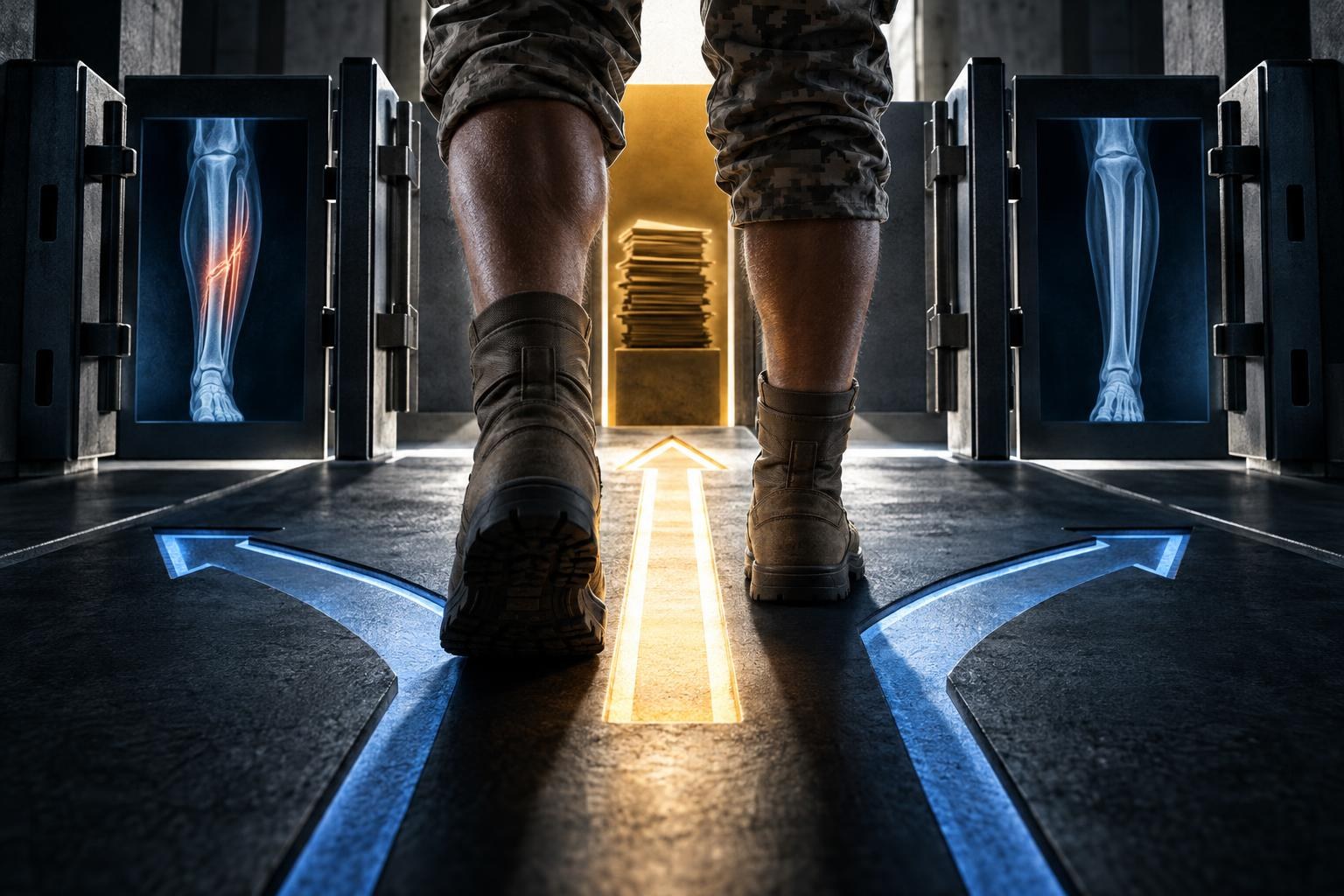
The VA quietly revised the section of its M21-1 adjudication manual that tells claims processors how to rate shin splints. The update lands in M21-1, Part V, Subpart iii, Chapter 1, Section B — Musculoskeletal Disabilities of the Extremities and Spine, and while it does not change a statute or the rating schedule itself, it changes how the people deciding your claim are told to apply existing rules. If you are a veteran with documented lower-leg pain, medial tibial stress syndrome, or a prior shin splints diagnosis from active duty, this internal guidance shift matters. M21-1 is the playbook raters use day to day, and when the playbook changes, outcomes can shift even when the underlying regulation looks the same. This post breaks down what was updated, who should pay attention, and what concrete steps you can take to make sure your claim is evaluated correctly under the revised instructions.
What the M21-1 Shin Splints Section Means
M21-1 is the VA's internal adjudication procedures manual. It does not carry the force of law the way Title 38 of the Code of Federal Regulations does, but raters at VA Regional Offices follow it closely when they evaluate disability claims. Part V, Subpart iii, Chapter 1, Section B is the chapter that covers musculoskeletal conditions of the arms, legs, and spine — including knee, ankle, foot, and lower-leg conditions like shin splints.
Shin splints — clinically known as medial tibial stress syndrome — is a common condition among service members. Repeated impact loading during running, rucking, physical training, and field exercises produces inflammation along the tibia. Some veterans separate with an active diagnosis. Others develop chronic pain years later that traces back to in-service running and marching.
For rating purposes, shin splints have historically been evaluated by analogy under the musculoskeletal portion of the VA Schedule for Rating Disabilities (VASRD, 38 CFR Part 4), because there is no diagnostic code specifically titled "shin splints." That means raters have had to pick the most closely analogous code and apply it. M21-1 guidance tells them how to do that consistently. When the VA updates this section, it is essentially refining the instructions raters follow when they encounter a shin splints claim on their desk.
What This Update Actually Changes
According to the VA's published guidance, the revision to M21-1, Part V, Subpart iii, Chapter 1, Section B updates the rating instructions specifically for shin splints. The full change log is posted on the VA's KnowVA portal at the VA Changes By Date page, which is where the VA publishes M21-1 manual revisions as they occur.
Because M21-1 is a procedural manual, the practical effect of an update like this is on how raters approach the evaluation: which diagnostic code they reference by analogy, what evidence they look for in the file, and how they document their rationale. The revision does not change the rating schedule itself — only the rating schedule (38 CFR Part 4) can do that — but it does change the path a rater takes to arrive at a decision.
A few things to keep in mind about how an M21-1 revision works:
- The change applies to claims decided after the effective date of the revision. If your claim is still pending, the updated guidance is the one your rater is using right now.
- M21-1 revisions are not retroactive in the way a regulatory change can be. If you already have a decision and you believe it was wrong under the new guidance, that is a question for an accredited representative.
- The substantive criteria for a compensable rating still come from the VASRD. The manual tells raters how to apply those criteria — not what they are.
Because the abstract provided by the VA is brief ("updated shin splints rating guidance"), the prudent move is to read the revised section directly or have an accredited representative do so on your behalf before drawing conclusions about how it will affect a specific claim.
Who Should Pay Attention
You should pay attention to this update if any of the following describes your situation:
- You have a pending claim for shin splints or medial tibial stress syndrome that has not yet received a decision.
- You are preparing to file an initial claim for lower-leg pain tied to running, rucking, or repetitive impact activity during service.
- You filed a claim for shin splints in the past and received a noncompensable (0 percent) rating, and your symptoms have worsened. A claim for increase would be evaluated under the current M21-1 guidance.
- You have a secondary condition claim — for example, a knee, ankle, or foot condition that you believe is caused or aggravated by chronic shin splints.
- You separated with shin splints noted in your service treatment records but never filed because the condition seemed minor at the time.
Veterans who served in physically demanding MOSs — infantry, combat engineers, military police, anyone who ran and rucked heavily — are statistically more likely to have a shin splints history in their records. If you fit that profile and you have ongoing lower-leg pain, the updated guidance is worth understanding before you file or refile.
This update does not mean a claim will be easier or harder to win. It means the rules of the road for raters have shifted slightly, and your evidence package should be built with the current guidance in mind.
What to Do Next
If this update is relevant to your situation, here are concrete steps to take:
- Pull your service treatment records (STRs). Look for any in-service complaint, diagnosis, or treatment related to shin pain, stress fractures, or medial tibial stress syndrome. Sick call slips, profile slips, and physical therapy notes all count.
- Get a current diagnosis. A claim built on "my legs hurt" will not survive review. Schedule an appointment with a primary care provider or orthopedic specialist and ask for a clear diagnostic workup. If a bone scan, MRI, or X-ray is appropriate, request it.
- Document functional impact. The rating schedule for musculoskeletal conditions weighs how the condition limits your activity. Keep a log of pain levels, what activities trigger symptoms, and what you can no longer do.
- Request a copy of the revised M21-1 section through the VA's KnowVA portal so you understand the framework your rater will apply.
- Consult an accredited VSO or VA-accredited attorney before filing or appealing. They can read the revised section against your specific facts and tell you whether the change helps, hurts, or is neutral for your claim.
- Do not file blind. A poorly prepared claim under updated guidance is still a poorly prepared claim. Build the file first.
Evidence That Strengthens a Claim Under This Rule
For a shin splints claim evaluated under the revised M21-1 section, the evidence types that tend to carry weight include:
- Service treatment records showing in-service onset — sick call entries, physical therapy referrals, temporary profiles limiting running or impact activity.
- A current medical diagnosis of shin splints or medial tibial stress syndrome from a qualified provider, ideally supported by imaging.
- A nexus opinion from a treating physician or independent medical examiner connecting your current condition to in-service activity. The opinion should use the "at least as likely as not" standard the VA recognizes.
- Buddy statements from fellow service members who witnessed your symptoms or saw you on profile during service.
- Lay statements from you describing onset, continuity of symptoms since separation, and current functional limits.
- Records of any continuous treatment since service — civilian PT notes, orthotics fittings, pain management visits.
- A VA examination (C&P exam) report, which the VA will typically order. Prepare for it by being specific about pain frequency, duration, and what makes it worse.
The more your file shows a continuous thread from in-service onset to current diagnosis to present-day functional impact, the stronger the claim.
Common Mistakes to Avoid
- Filing without a current diagnosis. A pain complaint without a clinical label is hard to rate.
- Assuming "shin splints" is too minor to claim. If it limits your activity, it is ratable.
- Ignoring secondary conditions. Chronic gait changes from shin pain can cause knee, hip, and ankle problems that are separately compensable.
- Skipping the C&P exam or showing up unprepared. The examiner's report often drives the decision.
- Using outdated guidance. If your representative is referencing an older version of M21-1, the analysis may not match what your rater is applying.
- Going it alone on appeals. Once a decision is issued, the procedural path narrows. Get accredited help before you respond.
Source & Getting Help
The official source for this revision is the VA KnowVA portal: M21-1 Changes By Date. Read the revised section in full before relying on any summary, including this one.
For a personalized read on how this update intersects with your records, use Ask Raven to query the updated guidance against your situation, or run a Raven Scan on your existing claim file to flag issues tied to the revised section. For legal questions or appeals strategy, work with an accredited VSO, claims agent, or VA-accredited attorney — Claim Raven is a preparation platform, not a substitute for accredited representation.
 M21-1 Update: VA Revises Genitourinary Rating Guidance for Vets
 38 CFR 4.59: VA Painful Motion and Functional Loss
 M21-1 Update: New IDES Exam Rules for Gulf War Illness Claims