
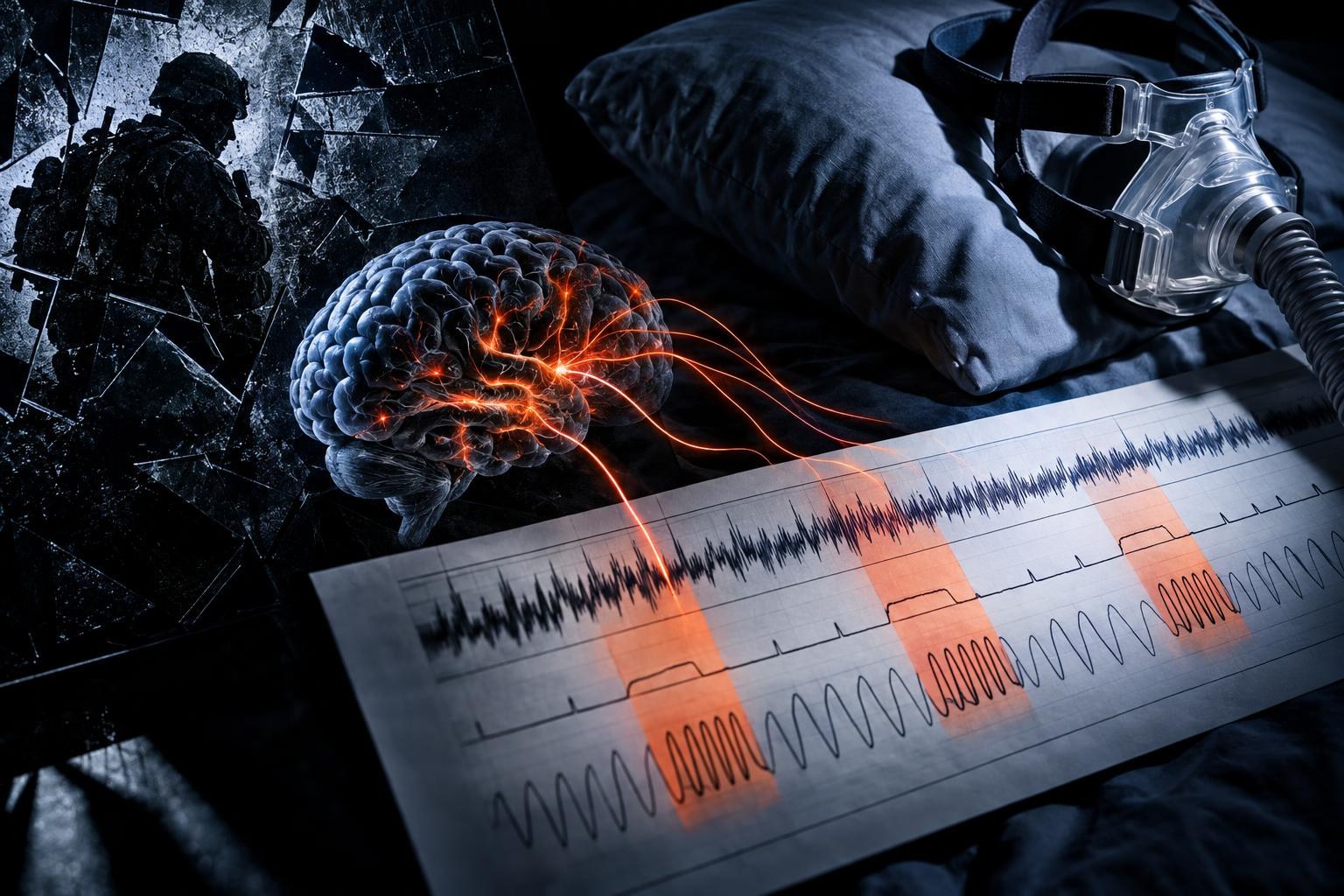
A sleep study and a PTSD diagnosis answer two important medical questions. They do not automatically answer a third: whether the sleep apnea is connected to the PTSD or its treatment.
For a secondary claim, that third question needs attention. The explanation should fit the veteran's actual medical history, address relevant alternatives and distinguish causation from aggravation.
I would start there before looking for a particular phrase to put in a nexus letter.
Sleep apnea and PTSD often occur together, but the direction is not settled
VA's National Center for PTSD describes obstructive sleep apnea as common among people with PTSD. Its professional review of sleep problems also explains that research has not definitively established the timing and direction of the relationship.
That leaves room for several possibilities. PTSD and sleep apnea may affect each other. Other factors may contribute to both. A study showing an association does not establish which explanation applies to one veteran.
The same VA review discusses improvements in PTSD symptoms associated with adherence to CPAP treatment among people who have both conditions. That finding supports appropriate treatment. It does not reverse the direction of a benefits claim or prove that PTSD caused the airway disorder.
Establish which sleep condition you have
Insomnia, nightmares and obstructive sleep apnea are different conditions or symptoms. Feeling exhausted does not identify the cause by itself.
VA's patient guidance on sleep and PTSD explains that a clinician may recommend a sleep study to evaluate sleep apnea. Keep the study report, diagnosis, prescribed treatment and follow-up records.
If someone has observed pauses in breathing or other symptoms, a dated statement can help describe the history. It does not replace clinical testing or establish medical causation.
Ask separate questions about causation and aggravation
Under 38 C.F.R. § 3.310, a secondary relationship can involve a disability caused by a service-connected condition or additional disability from aggravation beyond natural progress.
A useful opinion makes clear which relationship it addresses. “PTSD did not cause the apnea” may leave an aggravation question unresolved if the record reasonably raises it.
For aggravation, the regulation addresses baseline medical evidence and the extent of additional impairment. The clinician should explain what changed and why the proposed service-connected cause is medically supported. A temporary overlap in symptoms is not, by itself, a complete explanation.
When treatment or weight change is part of the theory
Some claims raise a more complicated sequence involving treatment effects, weight gain and sleep apnea. Each step needs support in the actual record.
VA's General Counsel opinion 1-2017 explains that obesity is not itself a disability for direct service connection but may serve as an intermediate step in a secondary-service-connection analysis. The opinion discusses whether a service-connected disability caused obesity, whether that obesity was a substantial factor in causing the claimed condition and whether the condition would have occurred without it.
That is not a shortcut from any weight gain to an award. Later case law can affect how a theory involving aggravation must be considered. An accredited representative can help identify the applicable question, while a qualified clinician evaluates the medical links.
Keep medication start dates, dose changes, weight history and relevant treatment notes. Do not assume a medication caused a change simply because both appear in the same chart, and do not change treatment to influence a claim.
What a useful medical explanation includes
A clinician does not need to agree with your proposed connection to produce useful information. The goal is an accurate explanation of the evidence.
| Part of the record | Question it helps answer |
|---|---|
| Sleep study and diagnosis | What condition was established and when? |
| PTSD and treatment history | What service-connected condition or treatment is proposed as the cause? |
| Symptom and weight timeline | Does the timing support the proposed sequence? |
| Other medical history | What alternative or additional explanations need consideration? |
| Prior opinions | Has an examiner already addressed the relationship, and what reasoning was used? |
A nexus letter should connect the facts to its conclusion. A collection of article abstracts, a statement that the conditions are associated or a favorable phrase without a rationale may not resolve the question VA must decide.
A high percentage in selected appeals is not the effect of buying a letter
Some analyses compare outcomes for records labeled as having strong nexus evidence with records labeled as having weak evidence. Even an accurately counted difference would not show what would happen if every veteran purchased a private opinion.
Those groups can differ in underlying facts, completeness of records and how the evidence was classified. If the classification draws on the Board's own favorable discussion, the relationship can partly reflect the outcome being described.
This article therefore does not offer a success-rate promise or recommend buying evidence to reach a predetermined result.
Keep the rating question separate
A supported secondary connection establishes why a disability is related to a service-connected condition. The percentage is decided under the rating criteria that apply to the relevant period.
If rating changes are discussed online, check the actual regulation and the effective date of any final rule. A proposal is not an effective rule. A prescribed device does not eliminate the need to establish service connection.
The practical next step is to identify the unanswered question in your own file. A sleep study, a clear treatment history and a reasoned opinion can do different jobs. Knowing which one is missing is more useful than requesting all three again.
Sources and scope
Sources reviewed September 16, 2026: the National Center for PTSD pages, section 3.310 and VA General Counsel opinion 1-2017 linked above. This is general evidence guidance, not a diagnosis or an opinion that PTSD caused any particular person's sleep apnea.
 Sleep Apnea Secondary to Tinnitus: What VA and the Board Need
 Secondary Conditions to PTSD: What the Evidence Must Show
 Sleep Apnea Claim Denied: Separate Diagnosis, Connection, and Rating