
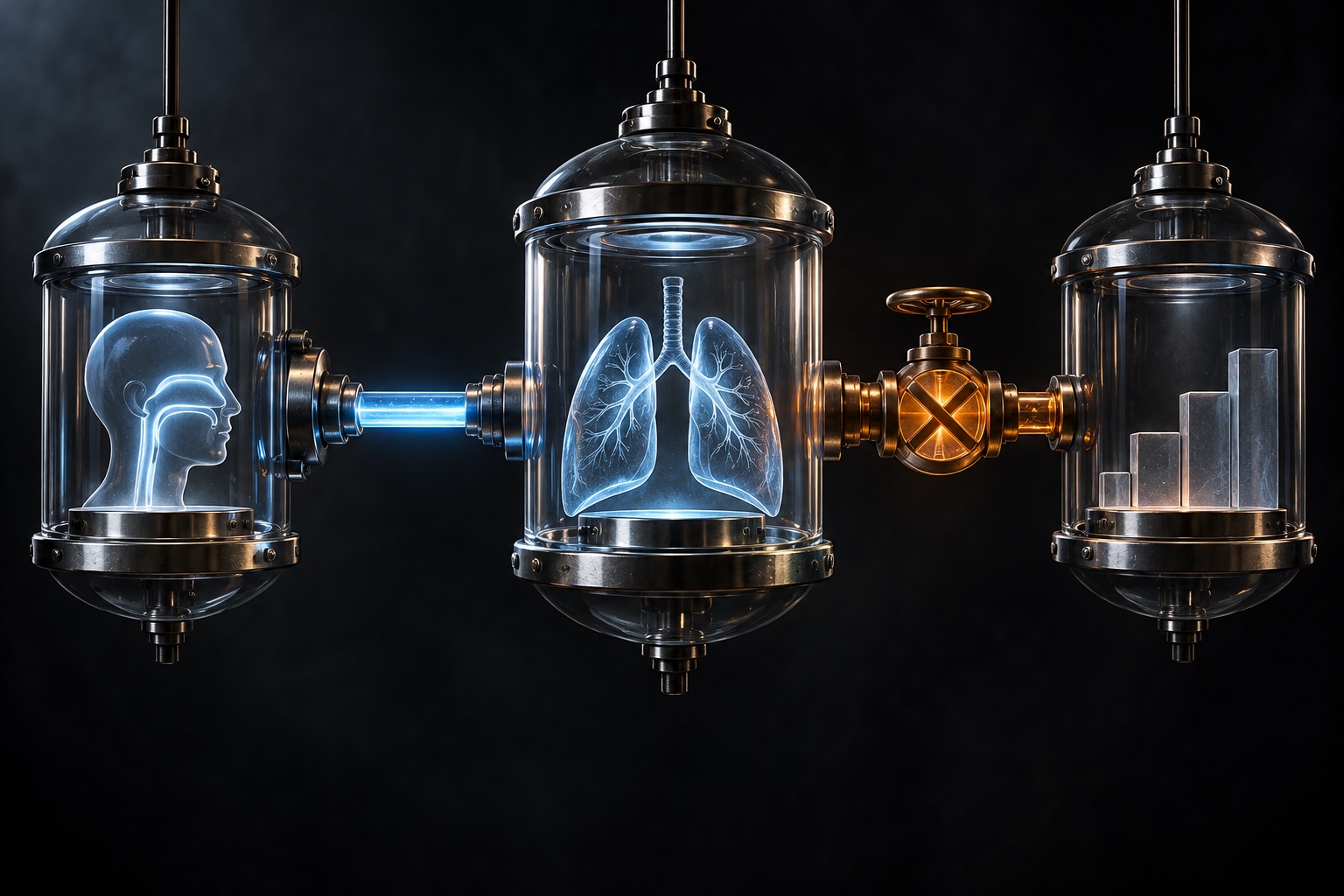
When VA denies a sleep apnea claim, the missing piece is usually the medical link to service, not the sleep study. Sleep apnea is not on VA's list of presumptive conditions, so VA does not assume the connection; you need a clinician's explanation tying it to something in service or to a condition that is already service connected. Before you add another sleep study or CPAP record, find out whether your decision disputed the diagnosis, the connection, or something else.
Not presumptive, but the PACT Act can still require an exam
VA's PACT Act page lists the burn pit and toxic exposure conditions that are now presumptive, including asthma diagnosed after service. Sleep apnea is not on that list, and the Board of Veterans' Appeals (the Board) treated it as a non-presumptive condition in the case below. A conceded toxic exposure therefore does not, by itself, make sleep apnea service connected.
It can still matter. Under 38 U.S.C. § 1168, added by the PACT Act, when you claim a disability with evidence of the disability and of a toxic exposure risk activity in service, and that evidence is not enough to establish service connection, VA must provide an exam and obtain an opinion on whether the disability is at least as likely as not linked to the exposure. The exception is when VA determines there is "no indication of an association" between the two.
What the CPAP prescription does and does not prove
VA rates sleep apnea under Diagnostic Code 6847: 50% when it requires a breathing assistance device such as a CPAP machine, 30% for persistent daytime sleepiness, 0% when there are no symptoms but a documented sleep disorder, and 100% for chronic respiratory failure, cor pulmonale or a tracheostomy. VA proposed new sleep apnea criteria in February 2022, but no final rule has been published, so the CPAP level still pays 50%. That rating applies only after service connection is granted. A CPAP prescription shows how the condition is treated, not why you have it. The sleep apnea condition guide covers the rating in more depth.
Locate the condition and the theory VA decided
Read the issue heading, favorable findings, "Reasons for Decision," evidence list, and any exam or medical opinion. A decision can accept the diagnosis and still reject a direct link to service. It can also address a secondary theory, where a service-connected condition is said to have caused or worsened the apnea. Under 38 C.F.R. § 3.310, causing a condition and aggravating it are separate questions, and an opinion that answers only one can leave the other open. A partner's account of snoring or pauses in breathing is useful lay evidence, but it is not a medical opinion about cause.
Put the dates in order: the first documented breathing complaint, the sleep study, the device prescription, the onset of any service-connected condition you claimed as the cause, and the date of each opinion. Note which records the examiner discussed and whether the opinion answered the question VA asked. If the file contains conflicting onset accounts, record both accurately.
For secondary claims, Claim Raven's case study of a sleep apnea grant secondary to PTSD shows what an explained medical chain looked like in one appeal, and the secondary-connection analysis looks at which pairings held up at the Board across many decisions.
A real remand: diagnosis in the file, exposure conceded, no opinion
In Board decision A25094442, October 30, 2025, VA had denied obstructive sleep apnea on the ground that "the evidence does not show a current diagnosed disability," and had not provided an exam. The Board pointed to a private sleep report, signed by a physician in February 2024 and submitted before the decision, that diagnosed the condition. VA had also conceded the veteran's participation in a toxic exposure risk activity. But no one had given an opinion on the link.
Applying § 1168, the Board found that VA had a duty to provide an exam and opinion before deciding, and remanded the sleep apnea claim for a clinician to address both direct service and the combined effect of the conceded exposures. It did not grant service connection. Recognizing the diagnosis and the exposure moved the claim forward, but the medical question still had to be answered.
| Question | Source to find | What stays separate |
|---|---|---|
| Did VA overlook an existing diagnosis? | The sleep report, its date, and proof it was in the file before the decision | Why the condition is connected to service |
| Was a toxic exposure conceded? | The favorable findings or the exposure memo | Whether a clinician links the apnea to that exposure |
| Did an opinion answer the theory you claimed? | The opinion text and the theory in your claim | Causation versus aggravation, for a secondary claim |
Sleep-apnea denial map
| Decision element | What VA accepted | Evidence and date to compare | Unresolved question |
|---|---|---|---|
| Diagnosed condition | Sleep study, clinician assessment | ||
| Direct service event or symptoms, if claimed | Service records; dated first-hand observations | ||
| Toxic exposure, if claimed | Exposure finding; whether an exam and opinion were provided | ||
| Service-connected cause, if claimed | The existing service-connection decision | ||
| Causation or aggravation opinion, if claimed | Timeline, baseline and later records, clinician's reasoning | ||
| Device use, only if the rating is at issue | Prescription and current treatment record | ||
| Evidence missing from VA's list | The source document and whether VA had it |
Leave unclaimed theories blank. If the letter concerns the rating for sleep apnea that is already service connected, the task is to compare the treatment record with DC 6847, not to prove the link again.
How sleep apnea appeals turn out at the Board
In Claim Raven's analysis of 2024 to 2025 Board decisions, sleep apnea was a decided issue in 1,115 condition records: 38.2% favorable, 24.7% denied and 37.1% remanded. Among 131 denied records with a classified reason, 60.3% were denied for no medical link to service and 26.7% because service connection was not shown. Across all conditions, claims coded as secondary were granted in 35.1% of 19,189 records and remanded in 41.5%. They come from appeals that were already disputed, so treat them as patterns, not as your odds.
What to do after the map
If you now have a medical opinion or a record VA did not see, that is new evidence for a Supplemental Claim. If VA overlooked a diagnosis already in the file, or skipped an exam that § 1168 or its general duty to assist required, a Higher-Level Review looks at the same record for that error. The deadline for each option is in your letter and in VA's decision review FAQ. For the general method behind a no-link denial, see the no-nexus guide.
Claim Raven's Raven Eye tool, offered on this page, can pull out what your notice accepted and rejected about sleep apnea and explain it beside the original. Claim Raven sells the tool; it cannot diagnose sleep apnea or supply a clinician's opinion.
Sources and scope
Checked September 23, 2026: 38 C.F.R. § 4.97, Diagnostic Code 6847 and § 3.310 (eCFR, current through August 27, 2026); 38 U.S.C. § 1168; VA's PACT Act page; the February 15, 2022 proposed rule (not final as of this date); VA's decision review pages; and Board decision A25094442. No particular secondary mechanism or individual link is asserted.
 Sleep Apnea Secondary to Rhinitis: What a VA Claim Needs
 VA PTSD Claim Denied: Find the Diagnosis, Stressor or Link Problem
 Sleep Apnea Secondary to Tinnitus: What VA and the Board Need