
 Landon · September 21, 2026 · 6 min read · Updated September 26, 2026
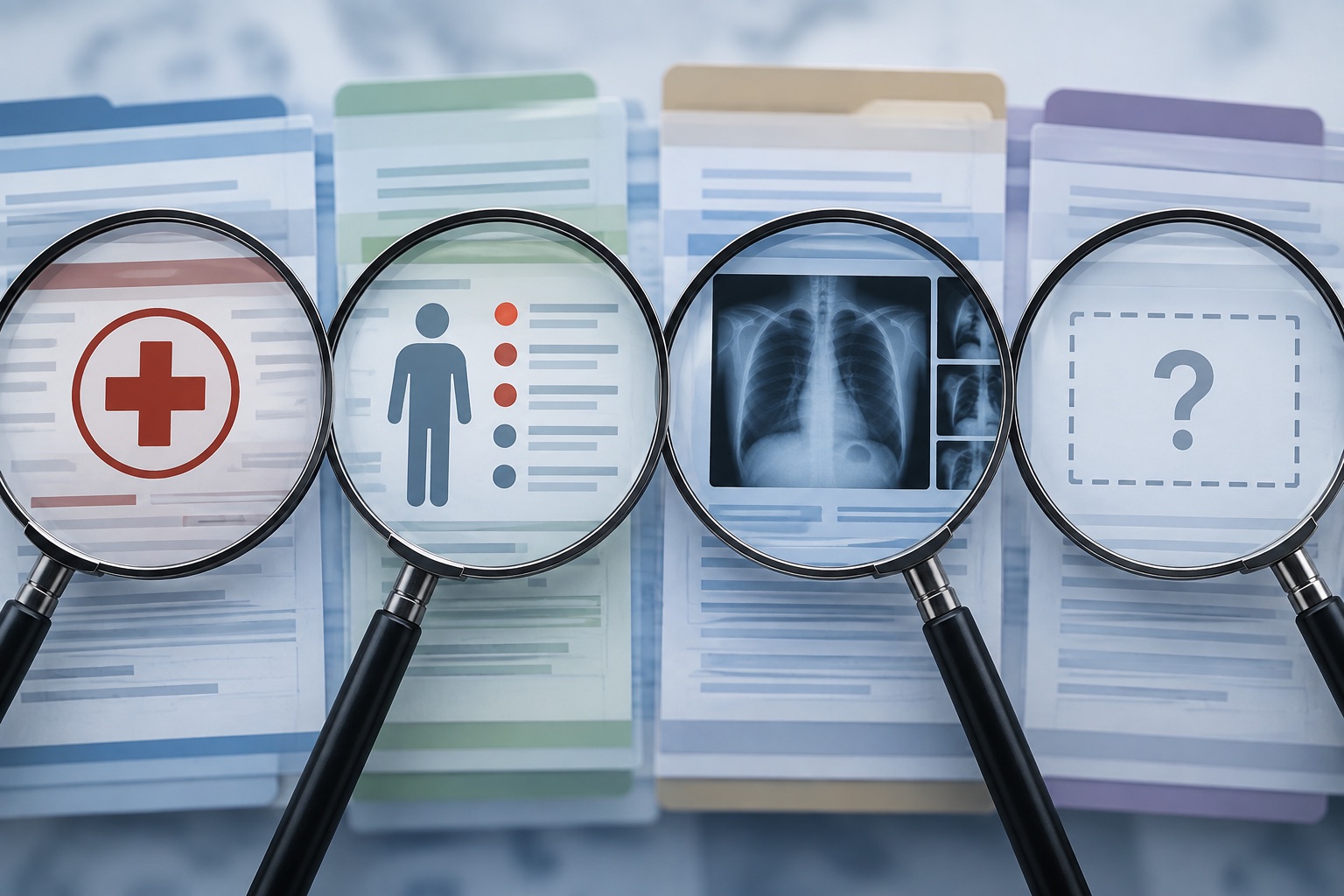
A denial for no current diagnosis means VA did not find a current disability for the condition it decided. Before you add more pages, sort your record into one of three situations, because each points to a different next step:
| What the record shows | What to check first | Rule that applies |
|---|---|---|
| A diagnosis VA did not have or did not mention | Whether VA obtained that record | The diagnosis counts if it existed while the claim was pending |
| Your symptoms under a different diagnosis | Whether the claim should be read to include it | A claim can be read by your symptoms, not only your label |
| Symptoms and limits, but no diagnosis | Whether the records show lost function | Pain that impairs earning capacity can be a disability |
Copy the exact reason
Use the wording from the issue's reasons section. Then answer:
- Did VA say there is no diagnosis, no current disability, or no persistent symptoms?
- Which evidence did VA list?
- Is there a C&P exam or medical opinion, and what did it find?
- Are there favorable findings about symptoms, treatment, or an event?
- Does the medical record name the condition differently than your claim did?
A diagnosis, a symptom, and a test are not the same
Fictional record set:
- January note: "reports intermittent numbness in right hand."
- March nerve study: "no evidence of median neuropathy."
- June specialist note: "symptoms more consistent with cervical radiculopathy."
The file contains symptoms and testing. It may not support the claimed carpal tunnel syndrome, but it points to cervical radiculopathy as the likely source of the same numbness.
That difference does not have to end the claim. In Clemons v. Shinseki, 23 Vet. App. 1 (2009), the Court of Appeals for Veterans Claims held that a claim filed for PTSD had to be read as a claim for any mental disability reasonably encompassed by the veteran's description, symptoms, and the evidence. The court reasoned that the veteran could describe his symptoms but was generally not competent to diagnose the mental condition, so the claim did not end because his label was wrong. The Board has applied the same reasoning to a physical claim: in a January 28, 2022 decision (Citation Nr. 22004868), it treated claims filed for a right index finger and a right wrist and forearm as a claim for right carpal tunnel syndrome, based on consistent reports of hand and wrist numbness, and granted service connection. Individual Board decisions do not bind other cases, and how far a claim reaches depends on its record.
Is the diagnosis current?
"Current" is broader than it sounds. In McClain v. Nicholson, 21 Vet. App. 319 (2007), the court held that the requirement is met when the disability exists when you file the claim or at any time while it is pending, even if it resolves before VA decides. A diagnosis from partway through the claim counts.
The weight still matters. A problem-list entry copied forward for years may count for less than a recent assessment supported by an exam or testing. Whether a normal test rules out the claimed condition is a medical question for a clinician. See 38 C.F.R. § 3.159 for the line between competent medical and lay evidence, and 38 C.F.R. § 3.303 for the general service-connection framework.
When there is pain but no diagnosis
A formal diagnosis is not always required. In Saunders v. Wilkie, 886 F.3d 1356 (Fed. Cir. 2018), the Federal Circuit held that pain without a diagnosis can be a disability. The limit is in the same opinion: the pain must reach "the level of a functional impairment of earning capacity," and subjective pain alone is not enough. The in-service event and the link are still required.
The Board applies both limits. In a February 7, 2025 decision (Citation Nr. A25011461), it cited McClain and Saunders, then denied service connection for a left knee strain because the record showed no knee diagnosis at any time during the claim and no functional impairment of the knee. The practical lesson: if you have no diagnosis, the records and statements that matter are the ones describing what the pain stops you from doing at work and at home.
Check for records VA did not have
If a private specialist made the diagnosis, confirm that VA obtained or considered that record. Identify the provider, the date, and the report itself; a summary from memory is not the same. VA lists doctors' reports, X-rays, and test results as medical evidence on its evidence requirements page.
Build a current-condition worksheet
| Question | Source to check |
|---|---|
| What condition is actually diagnosed, and when? | Recent assessment, specialist note, DBQ, or exam |
| What symptoms are documented? | Treatment notes and competent lay statements |
| What function is limited? | Work restrictions, clinician notes, lay statements about daily tasks |
| What tests were performed? | Imaging, laboratory, sleep, nerve, or other reports |
| Is another diagnosis proposed for the same symptoms? | Differential diagnosis or specialist reasoning |
| Did VA consider the source? | Decision evidence list and claims file |
How often Board denials turn on diagnosis
In Claim Raven's classification of Board of Veterans' Appeals denials where a primary reason could be identified, no current diagnosis was the main reason in 16.3%. These are Board appeal outcomes in Claim Raven's analysis of 2024 to 2025 decisions, a group of already-disputed claims, so the figure describes a pattern, not your odds. The classification of 16,800 Board denials explains the method and the other reasons. For condition-specific versions of this problem, see the guides to hearing-loss denials, where test thresholds decide whether a hearing disability exists, sleep apnea denials, and asthma denials.
If VA accepted the diagnosis and denied the claim for no medical link instead, see VA claim denied for no nexus. A diagnosis record VA never had is new evidence; a dispute about how VA read records it already had is a different task. Supplemental Claim vs. HLR vs. Board Appeal compares the review options.
Raven Eye explains a decision's stated reason with one free starter analysis per account. Raven Scan, a Plus feature, looks for documented conditions, symptoms, and page references in up to 30 medical-record PDFs it can read. Neither tool diagnoses a condition. Claim Raven sells both tools and has a commercial interest in them.
Denied for no current diagnosis: common questions
What does a VA denial for no current diagnosis mean?
VA did not find a current disability for the condition it decided. The record may hold a diagnosis VA did not have, your symptoms under a different diagnosis, or symptoms and limits with no diagnosis. Each points to a different next step.
Can VA grant a claim without a diagnosis?
Sometimes. In Saunders v. Wilkie, the Federal Circuit held that pain without a diagnosis can be a disability if it reaches the level of a functional impairment of earning capacity. Subjective pain alone is not enough, and the in-service event and link are still required.
What counts as a current diagnosis for VA?
Under McClain v. Nicholson, the requirement is met when the disability exists when you file or at any time while the claim is pending, even if it resolves before VA decides.
What if my records show a different diagnosis than I claimed?
That does not have to end the claim. In Clemons v. Shinseki, the court held that a claim must be read to include any disability reasonably encompassed by your description, symptoms and the evidence. How far a claim reaches depends on its record.
What if a private doctor diagnosed me but VA denied for no diagnosis?
Confirm that VA obtained or considered that record. Identify the provider, the date and the report itself. A diagnosis record VA never had is new evidence.
How often are Board denials based on no current diagnosis?
In Claim Raven's classification of Board denials where a primary reason could be identified, no current diagnosis was the main reason in 16.3%. These are already-disputed appeals, so the figure describes a pattern, not your odds.
Sources and scope
Checked September 23, 2026: Saunders v. Wilkie (decided April 3, 2018); Clemons v. Shinseki (February 17, 2009); McClain v. Nicholson (June 21, 2007); Board decisions 22004868 and A25011461; 38 C.F.R. §§ 3.159 and 3.303; VA evidence requirements. The record set is fictional.
 Back Pain Flare-Ups for a VA Claim: Document Changes in Daily Function
 Adding Dependents to VA Disability: Forms and 2026 Pay
 MOS and VA Disability Claims: What Our BVA Sample Shows