Arizona is changing its disabled-veteran property-tax exemptions again for 2027. An earlier state meeting record shows why explaining the change deserves attention alongside passing it.
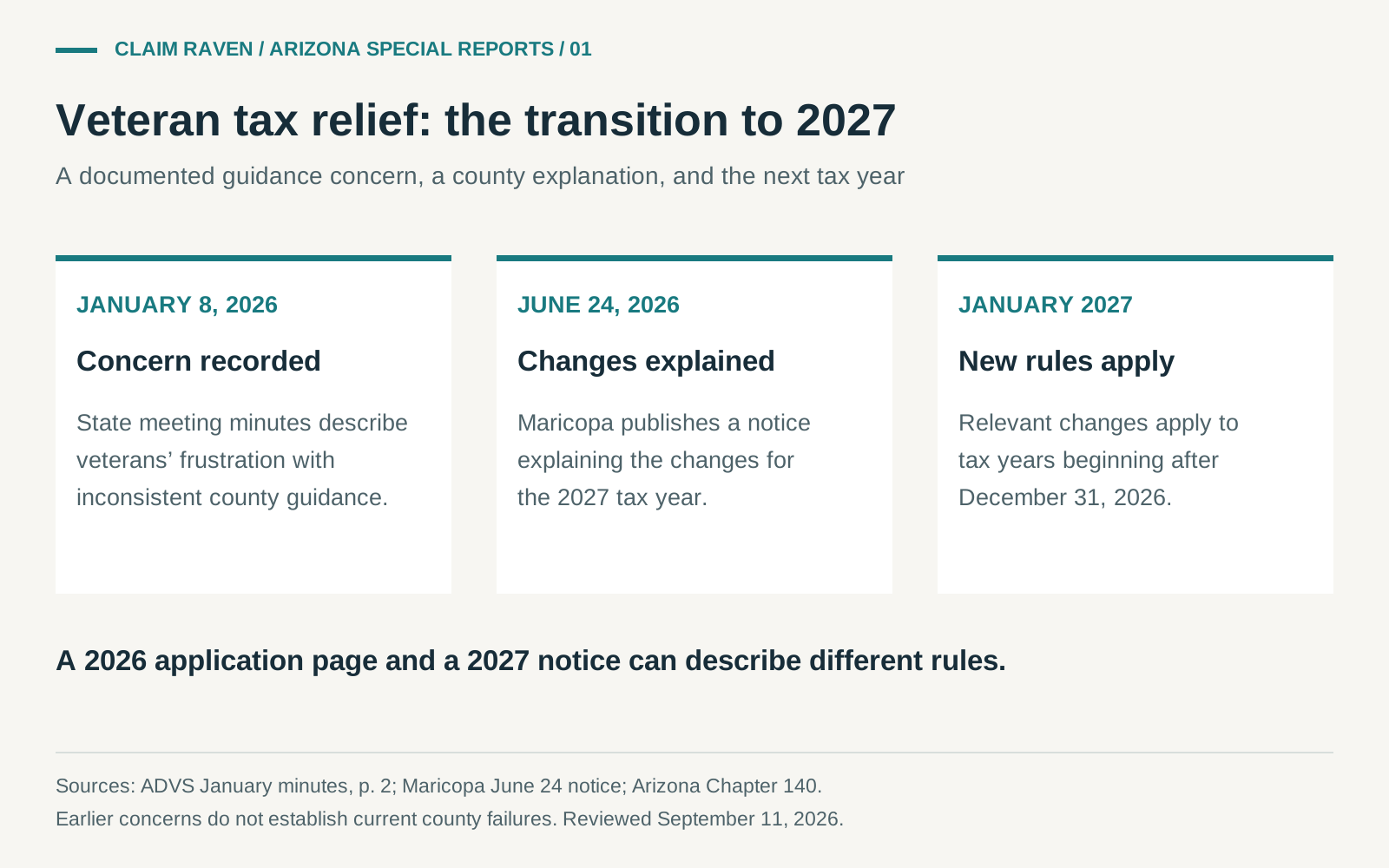
At the January 8, 2026 meeting of the Arizona Veterans’ Services Advisory Commission, the legislative update described veterans’ frustration with inconsistent guidance and application requirements across counties. The minutes also recorded the department’s limited role: veterans were being directed to county assessors for determinations while legislative clarification was anticipated. That is a documented concern raised at a public meeting, rather than a new finding about any particular county’s decisions. January commission minutes, page 2.
Months later, the state enacted further changes. The question now is whether someone who previously did not qualify can recognize that the rules are changing—and find the correct instructions for the correct year.
The January record describes concerns at that time. It does not establish that the same problems persist today. Sources: ADVS January 8 minutes; Maricopa County June 24 notice; 2026 Arizona Chapter 140.
What changes in 2027
The enacted legislation amends Arizona’s exemption statute and makes the relevant changes applicable to tax years beginning after December 31, 2026. Its provisions include expanded treatment of qualifying veterans receiving Total Disability based on Individual Unemployability, known as TDIU, and surviving spouses. 2026 Chapter 140, sections 11 and 34.
Maricopa County’s June 24 explanation says the 2027 changes remove income limits for the covered disabled-veteran and surviving-spouse program. It describes full primary-residence exemptions for qualifying veterans rated 100% disabled, including those receiving TDIU, and expanded options for qualifying surviving spouses. Its notice explicitly identifies January 2027 as the start. Maricopa County’s 2027 notice.
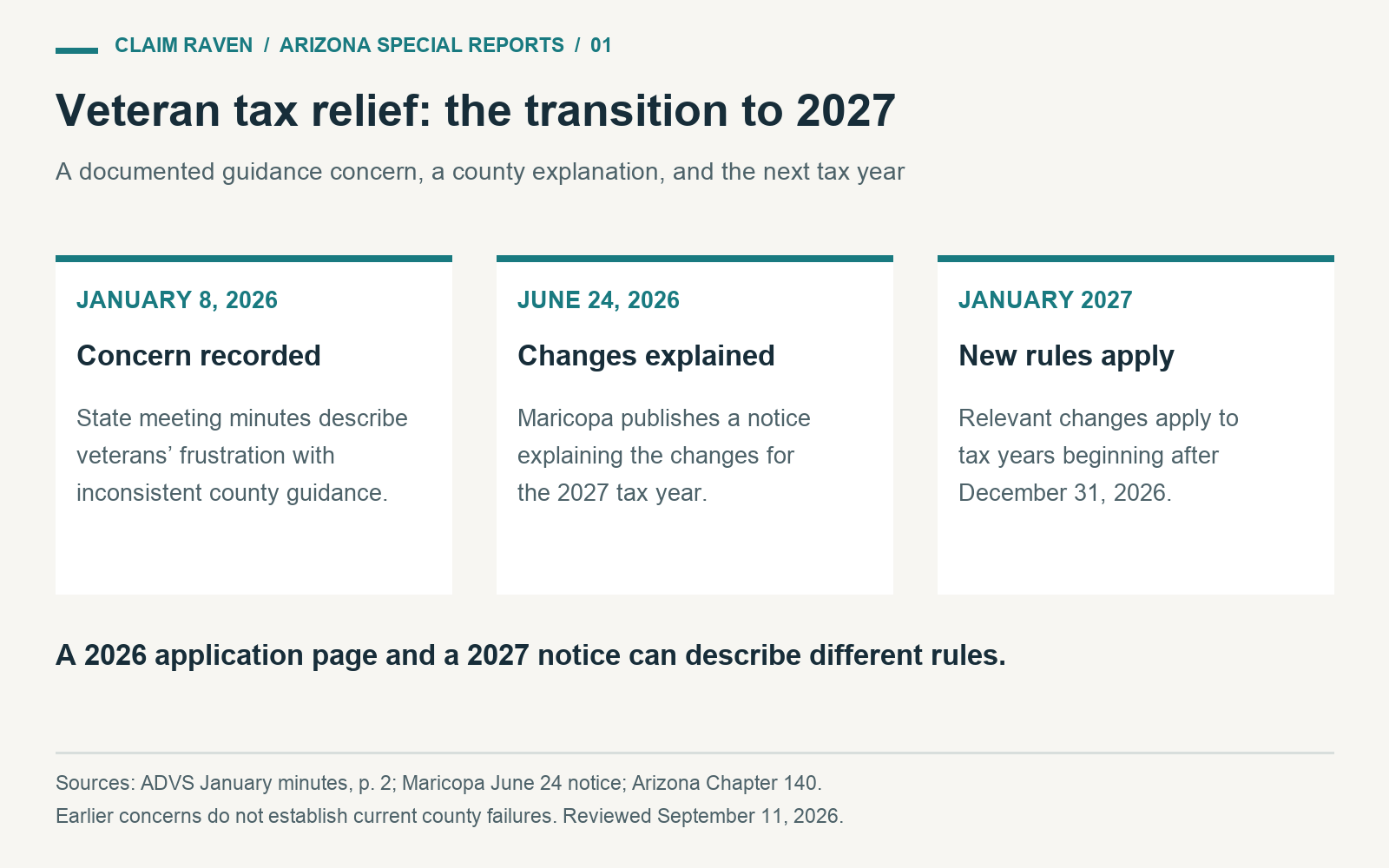
This timing is essential. A household reading a 2026 application page and a 2027 announcement may encounter different requirements without either page being wrong. The year printed beside the eligibility rules is part of the answer.
Pima County’s public information also distinguishes the forthcoming changes from the exemption applied to 2026 tax bills. For applicants, the useful comparison is between the instructions for their own tax year and exemption category—not between undated snippets from different pages. Pima County Assessor, Pima exemption guidance.
The practical test: can a veteran use the information?
Our assessment is that a successful rollout should answer four questions on a single clearly dated page:
- Which rules apply to the current tax year, and which begin in 2027?
- Does an existing recipient need to take action?
- What should someone do if a previous income limit prevented eligibility?
- How can a person who cannot travel submit the required documents?
That last question should be checked against the full instructions. Pinal County describes an in-person first application, but also directs people who cannot come to the office to call or email about other arrangements. Reporting only the in-person requirement would leave out a meaningful option. Pinal veteran exemption instructions.
Veterans should identify their county, tax year and applicable exemption category before acting. A partial exemption based on assessed value should not be assumed to reduce the final tax bill by the same percentage as a VA disability rating. Current state guidance provides a starting point; the county assessor handles the application. Arizona Department of Revenue property-tax FAQs.
What the evidence establishes
The public record documents an earlier concern about inconsistent guidance and a later expansion of the law. It also provides examples of counties explaining the transition. It does not establish how many eligible households will apply, how many will be approved, or whether any office improperly denied an exemption.
Those distinctions matter for evaluating the rollout. Clear instructions can be examined today. Actual participation and application outcomes require administrative records. Neither a confusing webpage nor a veteran population estimate can substitute for those records.
About this report: Claim Raven reviewed state law, official guidance and the cited public meeting record. This is an analysis of the 2027 transition, not a scored county audit. Sources were reviewed September 10–11, 2026. Claim Raven is a commercial veteran-facing claims product; this report does not imply agency endorsement.
Read the other Special Reports, with sources, graphics and methods.
 Is VA Disability Taxable? The Federal, State, and SSDI Interactions
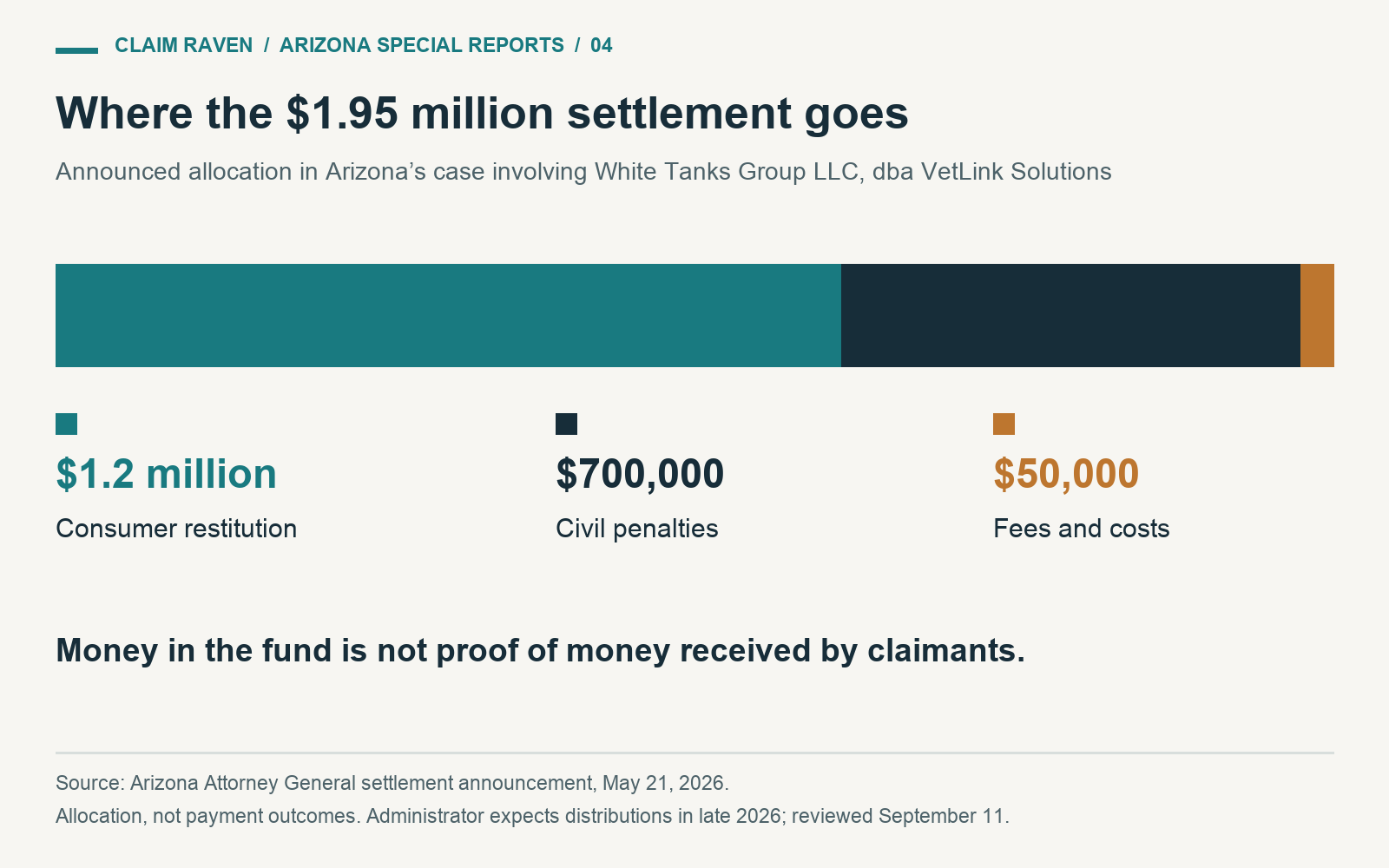 Arizona’s $1.95 million VetLink settlement includes $1.2 million for restitution. What comes next?
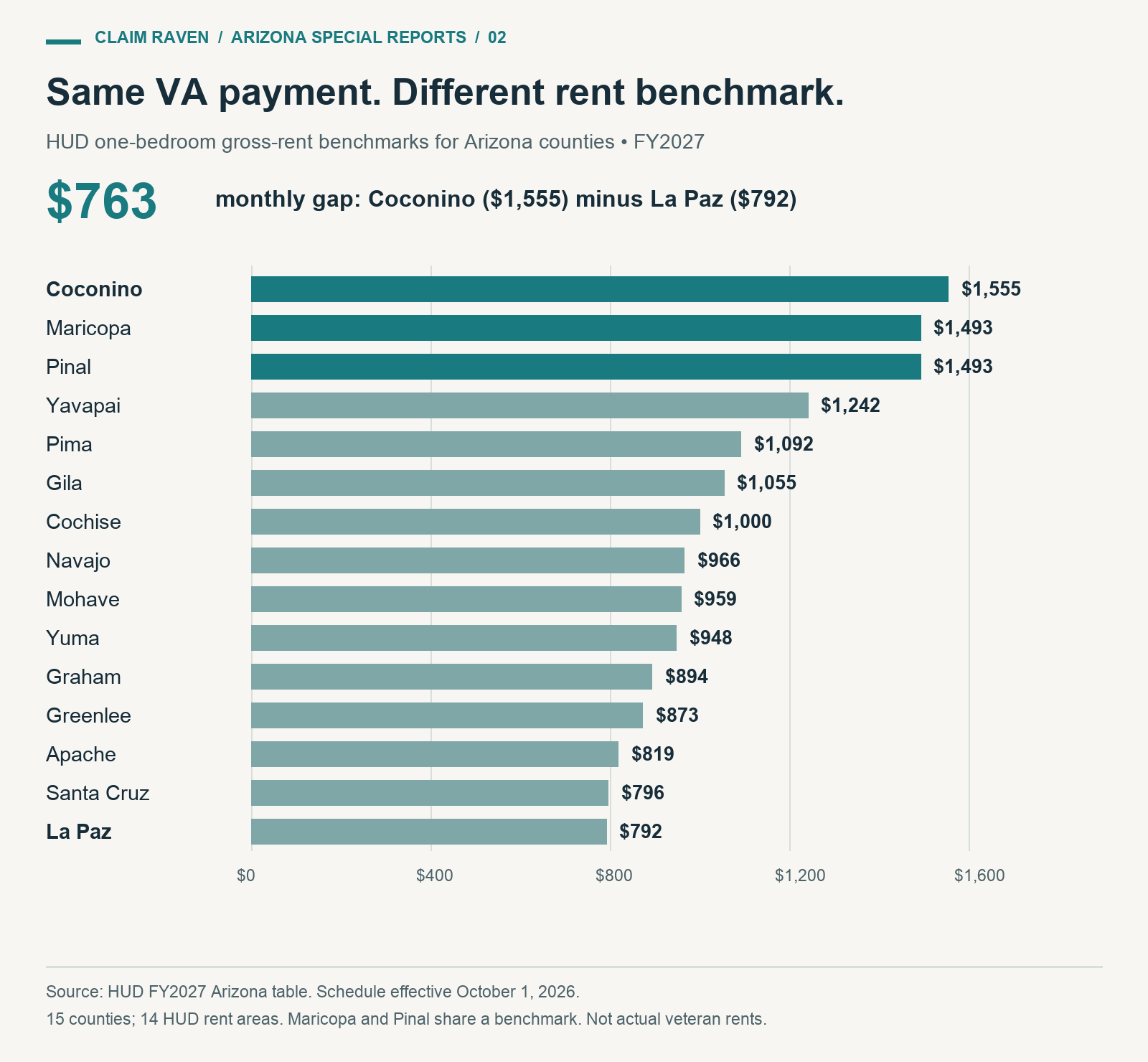 The same VA payment faces a $763 monthly rent gap across Arizona